The Case for Investing in America
Chapter 12
Make the Case for Yourself
Your Personal Investment Manifesto for the Long Game
Imagine, for a moment, a letter arriving from thirty years in the future, written in your own hand.
The you of three decades from now is writing to the you of today, and the letter is about money — but really, it is about the choices you are making right now, in this moment, with this book in your hands. There are two versions of that letter, and which one you eventually write depends almost entirely on what you do in the weeks after you finish this final chapter.
In one version, the future you writes with quiet gratitude. Thank you, it says, for starting when you did. For putting money to work and leaving it alone. For holding through the crashes that terrified you, the ones I can barely remember now because they turned out not to matter. For ignoring the noise and trusting the engine. Because you did those unglamorous things, faithfully, for thirty years, I am writing to you from a position of security and freedom that you, today, can only imagine.
In the other version, the letter is heavier. I wish you had started sooner, it says. I wish you had not waited for the perfect moment that never came. I wish you had held on instead of selling in fear, had trusted the evidence instead of the headlines. The knowledge was in your hands. You understood the case. And still you hesitated, and the years passed, and the compounding that could have been mine went instead to those who acted while you waited.
This entire book has been an argument about America. This final chapter is an argument about you. Because the most rigorous case for investing in America means nothing — nothing at all — if you do not make the case for your own financial future, and then act on it. Knowledge that does not become action is just entertainment. This chapter is about turning everything you now understand into the letter you actually want to receive.
KNOWLEDGE IS NOT THE SAME AS WEALTH
Let me state plainly a truth that the financial world works hard to obscure, because so much of its business depends on obscuring it.
You do not become wealthy by knowing things. You become wealthy by doing a small number of simple things, consistently, for a long time. The gap between the investor who builds real wealth and the one who does not is almost never a gap in knowledge. It is a gap in action and in temperament — in the willingness to start, the discipline to continue, and the calm to hold on when holding on is hard.
This is, in a way, liberating news. You have, by reading this book, already acquired the understanding you need. You do not require a finance degree, a special talent, insider access, or a complicated strategy. You understand the case for owning the broad American economy. You understand why crashes are not the enemy and why your own panic is. You understand why time in the market beats timing the market, why broad ownership beats stock-picking, why patience beats cleverness. The knowledge is already yours.
What remains is not more knowledge. It is the decision to act on the knowledge you have, and then the much harder, longer work of continuing to act on it through years of noise, fear, and temptation. The financial media will spend the rest of your life trying to convince you that you need to know more, do more, react more, trade more — because a calm, patient, do-nothing investor is not a profitable customer for their endless advice. Resist this. The path to wealth was never about knowing more. It was about doing the simple things faithfully, for a long time. You already know what the simple things are. The only question is whether you will do them.
THE QUESTIONS ONLY YOU CAN ANSWER
Before the doing, there is a small amount of honest reflection that genuinely matters, because while the strategy is universal, its application is personal. There are a handful of questions that only you can answer, and answering them honestly is the foundation of a sound investment life.
The first is: what is this money for? Not in vague terms, but truly. Is it for a retirement decades away, for your children's future, for freedom from work, for security against the unknown? The purpose of the money shapes how you should hold it, and an investor who does not know what their money is for is navigating without a destination. Name the purpose. Make it real and specific. It will be your anchor when the storms come.
The second is: how long is your horizon? Everything in this book depends on time — the compounding, the riding out of crashes, the capturing of the long upward march. An investor with thirty years can hold through anything; an investor who needs the money next year cannot take the same risks. Be honest with yourself about when you will actually need each portion of your money, because the honest answer determines how much of the storm you can afford to weather.
The third is: how will you actually behave when your wealth is falling? This is the question people most want to avoid, and it is the most important. It is easy, on a calm day, to declare that you will hold through any crash. It is another thing entirely to do it when the screen is red and the headlines scream and your savings appear to be evaporating. Know yourself. If you are honest that you may panic, then the answer is not to pretend you won't — it is to build a plan and structure your investments so that your panicking self has fewer levers to pull. The investor who knows their own weakness can defend against it. The one who pretends to a discipline they do not have will be ambushed by their own nature at the worst possible moment.
Answer these three questions honestly — what the money is for, how long you have, and how you will really behave — and you have built the personal foundation on which the universal strategy rests.
THE ONE DECISION
Here is something that ought to relieve you. The investment life this book recommends does not require a thousand good decisions. It requires, essentially, one good decision, made once and then defended against the constant temptation to unmake it.
The one decision is this: to commit to owning the broad American economy for the long term, and to hold that commitment through everything. That is nearly the whole of it. Not a series of clever trades, not a constant rebalancing in response to the news, not an ongoing hunt for the next great stock — just one foundational commitment, made deliberately, and then protected from your own future impulses to abandon it.
The reason this framing matters is psychological. If you believe that investing requires constant good decisions, you will feel constant pressure to act, and that pressure is exactly what leads to the panic-selling and the market-timing and the stock-chasing that destroy returns. But if you understand that you need to make essentially one good decision and then mostly leave it alone, the entire weight of the enterprise changes. Your job is no longer to be brilliant a thousand times. It is to be steadfast once, and then patient for a very long time. Steadfastness and patience are not talents reserved for the gifted. They are disciplines available to anyone who decides to cultivate them.
Make the one decision. Then spend the rest of your investing life defending it from the noise, the fear, and the endless temptation to do something clever. That defense — boring, unglamorous, and faithful — is where the fortune is actually made.
BUILDING THE DISCIPLINE INTO THE STRUCTURE
Because temperament is so much harder than knowledge, the wisest thing you can do is build your discipline into the very structure of how you invest, so that doing the right thing requires no heroic willpower in the moment.
The single most powerful structural tool is automation — arranging your investing so that money flows into your broad ownership of the American economy regularly, steadily, automatically, without requiring a decision each time. When investing happens automatically, it bypasses the emotional brain entirely. You are not deciding, each month, whether the moment feels right; the money simply goes to work on schedule, in good times and bad, buying more when prices are low and fear is high precisely because you have removed the choice from your trembling hands. This steady, automatic, unemotional investing is the closest thing there is to a guaranteed path to building wealth over time, because it harnesses consistency and removes the human weakness that sabotages so many investors.
The second structural tool is distance. The investor who watches their portfolio every day, who checks the market constantly, who marinates in the financial news, is exposing their fragile temperament to constant provocation. The investor who deliberately creates distance — who checks rarely, who does not follow the daily noise, who structures their life so that the market's tremors do not reach them each hour — protects their discipline by simply not subjecting it to constant assault. You cannot panic-sell in a crash you are barely watching. Distance is not negligence; it is a deliberate defense of your own steadfastness against your own nature.
Build the discipline into the structure — automate the investing, create the distance — and you will find that the hardest part of this whole enterprise, the holding on, becomes dramatically easier, because you have arranged your affairs so that the right behavior requires no willpower at all.
THE COST OF ONE MORE YEAR OF WAITING
If there is a single enemy standing between you and the letter of gratitude from your future self, it is not the market, not a crash, not a wrong stock pick. It is delay — the quiet, reasonable-sounding decision to begin not today but soon, once a few things are clearer, once the moment feels more right. And delay is worth confronting directly, because it is the most expensive habit an investor can have and the one that disguises itself most convincingly as prudence.
The thing that makes early action so powerful is the nature of compounding itself. Wealth built through long ownership of the American engine does not grow in a straight line; it grows upon itself, each year's gains becoming the base for the next year's, the growth accelerating as the years accumulate. This means that the earliest years of investing, though they involve the smallest sums, are paradoxically the most valuable, because they have the longest time to compound. The money you put to work today has decades to grow upon itself; the same money put to work a few years from now has lost those crucial early years of compounding forever, and no amount of later effort can fully recover them. Time is the one ingredient in this entire enterprise that cannot be bought, borrowed, or recovered once spent.
This is why "I'll start soon" is so quietly ruinous. Each year of waiting is not merely a year postponed; it is a year of compounding permanently surrendered, subtracted from the far end of your life when it would have mattered most. The investor who begins today with a modest sum will, in the long run, very often surpass the one who begins years later with a larger sum, because the early starter gave their money the one thing that matters most: time. The cost of waiting is invisible in the moment and enormous over a lifetime, and it is paid not by your present self, who feels nothing, but by your future self, who inherits a smaller fortune than they might have had.
So let the final practical message of this book be the simplest one of all. The best moment to begin was years ago. The second-best moment is now — not soon, not once things are clearer, but now, with whatever you can sensibly commit, putting the engine and the years to work on your behalf before another year of irrecoverable compounding slips away. Begin, and let time do what only time can do.
THE WEALTH YOU PASS ON
There is a dimension to all of this that reaches beyond your own lifetime, and it is worth naming as we approach the end, because it elevates the entire enterprise from personal gain to something larger.
When you build wealth slowly, patiently, through long ownership of the American engine, you are not only securing your own future. You are potentially creating something that can outlast you — wealth that can pass to your children, your grandchildren, the people and causes you care about, compounding across generations as it has for the patient owners of American enterprise since the founding. The merchant of 1814, whose descendants we imagined still compounding two centuries later, made a choice whose benefits flowed far beyond his own life. You can make the same choice.
And there is something you can pass on that is even more valuable than the money: the understanding itself. The knowledge in this book — the case for patience, for broad ownership, for refusing to panic, for trusting the long upward march — is a form of wealth that you can teach to those who come after you, an inheritance of wisdom that can compound across generations just as the money does. A child who learns young to invest steadily, to hold through storms, to think in decades rather than days, has been given a gift greater than any single sum of money, because it is the gift that generates money for a lifetime. The greatest thing you can pass on is not the fortune. It is the mindset that builds the fortune.
THE DECLARATION
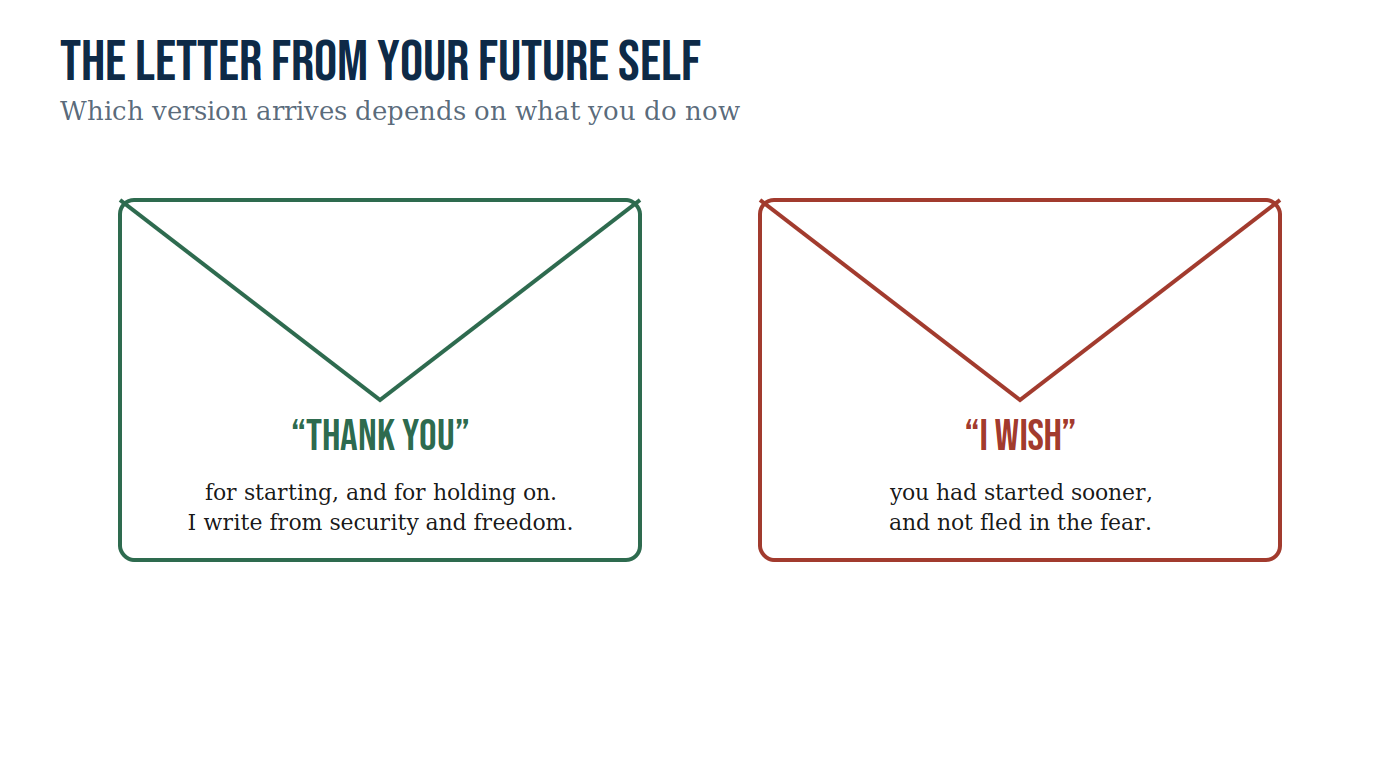
Figure 12.1 — The letter from your future self.
We have reached the end, and I want to leave you not with another argument but with a commitment — one that brings together everything this book has tried to give you, and that you can carry with you for the rest of your investing life.
This is what the patient investor in American enterprise comes, in the end, to believe:
I believe in the resilience of American enterprise — in its proven, two-and-a-half-century capacity to absorb every shock, convert every crisis into renewal, and emerge stronger from each disaster than before.
I believe in the compounding power of patience — in the simple, unglamorous discipline of owning the whole and holding it through everything, which has built more wealth than all the cleverness in the world.
I believe that the greatest wealth this nation will produce has not yet been created — that the engines of its growth are still running, the future is still being invented, and the best returns may still lie ahead, as they always have for those willing to wait for them.
I will not be shaken loose by the storms. I will not flee in the panic or wait for a certainty that never comes. I will make the one decision, defend it against my own worst instincts, and let time and the American engine do the work that no cleverness can do.
And I am here for it.
That is the declaration. It is not a guarantee — no honest book could offer one, and I have tried throughout to be honest about the risks alongside the case. It is a posture, a discipline, a way of being an investor that the entire weight of American history suggests will reward those who can hold it.
The case for investing in America has been made, across these chapters, as completely as I know how to make it. The structural advantages are real. The historical evidence is overwhelming. The engine is still running. But the case means nothing until you make it your own — until you turn understanding into action, and action into the patient discipline of a lifetime.
The letter from your future self is not yet written. Which version arrives, thirty years from now, depends on what you do after you close this book. You have the knowledge. You have the case. All that remains is to begin, and then to have the patience to let the engine — the greatest wealth-creation engine in the history of the world — do what it has done, faithfully, for two hundred and fifty years.
Make the case for yourself. Then go and live it.
* * *
A closing note: This book makes a deliberate, evidence-based case for long-term investment in the broad American economy. It is educational in purpose and does not constitute personalized investment, tax, or legal advice. Markets carry real risk, past performance does not guarantee future results, and every investor's situation is different. Before acting, consider consulting a qualified professional who can account for your specific circumstances, especially regarding taxes, estate planning, and cross-border investing.