a School of Economics and Management, Beijing Jiaotong University, PR China b School of Business, Taishan University, PR China c School of Accounting, Jiangxi University of Finance and Economics, PR China
Keywords: Subscribed capital system Creditor interests Debt default risk Corporate governance
The 2013 Company Law reform marked a watershed moment in China’s transition from a paid-in capital regime to an subscribed capital system, fundamentally reconfiguring the country’s corporate capital framework. Rooted in China’s broader shift from a planned to a market-oriented economy, the 2013 reform aimed to reduce market entry barriers, stimulate entrepreneurial activity, and enhance corporate flexibility by abolishing the minimum registered capital requirement, removing statutory paid-in deadlines, and introducing the subscribed capital system (Li & He, 2025). This reform replaced the long-standing administrative control over capital contribution with shareholder autonomy in determining subscription amounts and timelines (Tomasic, 2015), fundamentally altering the legal basis of capital credit and creditor protection.
This paper selects 2010–2023 as its research window, focusing on the institutional changes triggered by the 2013 Company Law reform and its 2014 implementation. The amendment introduced the subscribed capital registration system, abolishing minimum capital thresholds, removing statutory deadlines, and granting firms broad discretion over subscription, thereby fundamentally(p.2)departing from the traditional paid-in regime (Jiang, 2015). While the 2024 Company Law reform has already taken effect, examining the earlier reform remains of continuing academic and policy relevance for at least two reasons. First, the 2014–2023 period constitutes the only complete cycle in which the long-run consequences of the subscribed capital system can be systematically observed, providing indispensable empirical evidence on its effects on capital credibility, creditor risk, and corporate financing dynamics. Second, the 2013 reform laid the institutional foundation for the 2024 amendment; many of the latter’s provisions, such as the five-year subscription period, were explicitly designed to address systemic risks revealed during the preceding decade (Li & He, 2025). Thus, by evaluating the earlier reform, this study not only contributes to ongoing regulatory debates on balancing shareholder autonomy and creditor protection in China but also enriches the comparative corporate governance literature by offering large-sample evidence from an emerging market.
The subscribed capital system reform aims to address the issue of capital credit virtualization from earlier reforms, resolve the misuse of the subscribed capital system, protect creditors, and enhance market credibility. The 2013 reform of China’s Company Law grants shareholders autonomy over the capital contribution deadline, allowing the articles of association to freely determine the scale of subscribed capital and the timeline for its payment. While these changes lowered market entry barriers and stimulated entrepreneurial activity by granting shareholders greater autonomy over capital contribution schedules, they also introduced significant institutional risks. Firms could freely determine the amount and timing of capital contributions in their articles of association, resulting in phenomena such as inflated registered capital and the emergence of ’dwarf companies’ or ’empty shell companies’ (Wen & Zhao, 2018). The reform weakened the enforceability and transparency of actual capital contributions. The valuation and verification of in- kind contributions were entirely delegated to boards of directors, often aligned with shareholders’ interests, making it difficult for creditors to assess a firm’s actual financial position. Registered capital lost its traditional role as a reliable indicator of debt repayment capacity, while indefinite capital contribution deadlines enabled capital timing arbitrage. In practice, this led to a hollowing out of liability assets and increased exposure to creditor risk. Moreover, creditor protection mechanisms remained primarily ex post and judicial, offering limited deterrence and remedies. Overall, the 2013 reform, though aimed at enhancing flexibility and efficiency, tilted the institutional balance excessively toward shareholder autonomy at the expense of creditor security (Jiang, 2015).
Therefore, it is necessary to conduct an in-depth study of the legislation and practices concerning the subscription system and creditor protection across different legal systems to gain valuable insights for enhancing the subscription system in China. Legal systems like the statutory capital system and the subscribed capital system each have unique characteristics in their corporate capital arrangements. The statutory capital system emphasizes the principles of determination, maintenance, and immutability of corporate capital, whereas the subscribed capital system allows companies to issue shares up to the subscribed capital amount. This subscribed capital system reform holds significant implications for improving our subscription system, better balancing shareholder autonomy with creditor protection, and providing a theoretical foundation for future optimization of the subscribed capital system.
The legal logic of the subscribed capital system is grounded in the principles of contractual freedom and the corporation’s independent legal personality. Its core assumption is that rational market participants can self-correct through information disclosure and credit constraints. However, the law-and-economics perspective reveals two inherent contradictions. First, there is a fundamental tension between shareholders’ discretion over the timing of capital contributions and creditors’ need for stable repayment guarantees. Subscribed capital, as a form of “future credit,” is legally effective only insofar as the firm remains a going concern. In practice, however, when the triggering conditions for bankruptcy are ambiguous, acceleration clauses often fail to operate effectively, thereby undermining the enforceability of capital commitments (Granato, 2017). Second, worsening information asymmetry amplifies agency costs. Shareholders may unilaterally extend capital contribution periods or transfer unpaid equity interests through amendments to corporate charters, while creditors lack access to real-time information on contribution status, distorting the risk-pricing mechanism (Liao, Chen, & Lu, 2009).
Existing literature on the subscribed capital system is predominantly theoretical, with limited empirical investigation (Armour, 2006; Wen & Zhao, 2018). Legal scholarship has primarily relied on qualitative methods, focusing on the mechanisms by which the subscribed capital system may transmit risk to creditor rights. From a normative legal perspective, critics argue that the subscribed capital system undermines the traditional capital maintenance doctrine, highlighting that the liberalization of capital contribution timelines under the principle of charter autonomy may lead to the hollowing out of a firm’s asset base for liability purposes (Zhu, 2023). In contrast, Economics research has mainly explored the subscribed capital system’s macro-level effects, for example its role in fostering entrepreneurial activity. However, these studies have yet to uncover the intrinsic relationship between the subscribed capital system and creditor risk premiums. On the one hand, the subscribed capital system lower incorporation costs, enhance capital flexibility, and reduce regulatory burdens, thereby promoting firm and job creation while fostering industrial diversification and reducing economic concentration. (Armour, 2006; Cheng, Ding, & Liu, 2024; Yang, Jiang, Bai, Fu, & Liu, 2025). On the other hand, abolishing the minimum registered capital requirement and the abuse of extended contribution periods may erode the legitimate interests of firms and creditors(Li & He, 2025). Whether the subscribed capital system functions as a catalyst for innovation or as a breeding ground for erosion of creditor rights remains an open question. Rigorous empirical evidence based on large-sample analysis is urgently needed to evaluate its net effect on creditor protection.
To investigate this issue, we utilized a comprehensive dataset covering Chinese listed companies from 2010 to 2023 and employed empirical methods to examine the net effect of the subscribed capital system on creditor protection. We applied the difference-in- differences method to empirically test the impact of the subscription system on creditor protection and innovatively established experimental and control groups based on the financing constraint index. The rationale is that firms with varying levels of financing constraints exhibit systematic differences in their responses to policy shocks or market fluctuations. Specifically, firms with a high tendency toward financing constraints may evade responsibility by inflating registered capital or indefinitely delaying capital contributions, thereby exacerbating creditor risk and making it easier to abuse the subscription system. Our baseline test results indicate(p.3)that the registered capital subscription registration system significantly increases creditor risk. This effect remains stable across a series of endogeneity tests, including instrumental variable estimation, propensity score matching, the addition of fixed effects, and a series of robustness checks.
To clarify how the subscribed capital registration system increases creditor risk, we examine three foundational theoretical mechanisms: weakening creditor protection, lack of corporate governance transparency, and distortions in capital allocation efficiency. The subscribed capital system renders capital commitments nominal, distorting corporate debt repayment capacity and significantly increasing creditor risk. Additionally, under this system, enterprises are not required to disclose the actual payment progress in real time, exacerbating the lack of transparency in corporate governance and biasing creditor decision-making. Furthermore, the subscribed capital system distorts capital allocation efficiency, leading to a severe mismatch between capital and operational risk and thereby increasing the probability of corporate debt default.
To further understand the impact of the subscribed capital system on corporate creditors, we considered factors such as ownership property, management short-sightedness, bank-enterprise relationships, government intervention, and regional informatization. The results indicate that the subscribed capital system has a more significant impact on non-state-owned firms, short-term-oriented management, firms with weak banking relationships, and enterprises located in regions with higher government intervention and lower levels of informatization. Additionally, we conducted a series of analyses on corporate over-leverage and innovation capability. The results show that the subscription system significantly exacerbates the risk of corporate over-leverage and inhibits corporate innovation capability.
The main contributions of this paper are as follows: it empirically examines the dynamic impact of the subscribed capital system on creditor interests, filling an empirical research gap in this field and supplementing the limitations of the existing literature, which primarily focuses on qualitative analysis. Existing studies often focus on the legal defects of the subscription system —such as insufficient information disclosure, the virtualization of shareholder responsibility, and macro entrepreneurial incentive effects —but lack large-sample evidence on creditor risk premiums, default rates, and judicial relief costs.
Secondly, the framework for analyzing the risk transmission mechanisms of the subscribed capital system has been expanded. We have identified the unique transmission path of capital system reform in emerging markets, which includes the weakening of creditor protection mechanisms, the lack of transparency in corporate governance, and distortions in capital allocation efficiency. While most studies focus on the potential negative impact of the subscribed capital system on corporate creditor protection, few specifically analyze its intrinsic mechanisms. Our research findings confirm that the subscribed capital system can influence corporate creditors through three mechanisms: creditor protection, corporate governance, and capital allocation efficiency.
Finally, this paper offers policy insights from a dual perspective for optimizing subscribed capital system reform. For the government, the research confirms that “dynamic penetrative regulation” and a “tiered accountability system” can enhance the success rate of creditor recovery. For enterprises, it encourages them to abandon the misguided pursuit of large registered capital, helping them realize that asset credit is crucial to their survival and development. These findings not only provide direct evidence for the 2024 revision of the “Company Law,” such as the five-year paid-in capital deadline and joint liability clauses for defective equity but also offer cross-contextual references for emerging economies in balancing “facilitation of market access” and “transaction security” in institutional design.
The remainder of this paper is structured as follows: Section 2 introduces the policy background and outlines our hypothesis development. Section 3 details the model setup and data sources, while Section 4 presents empirical results, endogeneity analysis, and robustness checks. Section 5 delves into the core mechanisms, and Section 6 conducts further analysis. Finally, Section 7 concludes and proposes corresponding policy implications.
2. Policy background and theoretical analysis
2.1. Policy background
The strict paid-in capital registration system established by the first Company Law in 1993, while initially helping to regulate market order, gradually revealed its shortcomings. The high threshold for registered capital prevented many small- and medium-sized entrepreneurs from entering the market, dampened private investment enthusiasm, and locked up capital during the early stages of business operations, thereby increasing financing costs. It also led to irregularities, including false capital verification and capital withdrawals. Although the 2005 company law introduced certain adjustments, such as lowering the minimum registered capital and allowing installment contributions, it still failed to eliminate excessive government intervention, and the market entry threshold remained relatively high. By 2013, China was facing a slowdown in economic growth and pressure to upgrade its industrial structure, creating an urgent need to ease institutional constraints and unlock the benefits of reform. At the same time, global trends in company law reform were moving toward the relaxation of capital regulations. The 2013 subscribed capital system reform marked a significant breakthrough from the previously rigid statutory capital regime. This reform was driven by deeper needs arising from China’s transition from a planned to a market-oriented economy.
To address the excessive constraints imposed by traditional corporate capital systems on corporate autonomy, reduce startup costs, and stimulate market vitality, the Chinese government fully implemented the registered capital subscription registration system reform in 2013, systematically restructuring the framework for corporate entry and regulation. This reform is based on the core logic of ’lenient entry, strict supervision,’ aiming to unlock the potential of private investment through institutional deregulation. Its policy framework encompasses three pillars: (1) abolishing the minimum registered capital requirement; (2) eliminating the mandatory paid- in capital deadline, granting shareholders the autonomy to agree on the timing and methods of capital contribution; and (3) replacing(p.4)the annual inspection system with an annual report disclosure system, establishing a national unified enterprise credit information disclosure system. The policy impact exhibits significant temporal and spatial heterogeneity: at the central level, the minimum registered capital and paid-in capital requirements were uniformly abolished through the revision of the Company Law (December 2013), but the pilot implementation process at the local level was non-synchronous, pioneering cities such as Shenzhen and Zhuhai began implementing ’zero paid-in capital’ registration as early as March 2012, while central and western provinces generally did not implement the policy until February 2014, following the issuance of the ’Reform Measures for the Registered Capital Registration System.’ This policy provides a reasonable quasi-natural experiment for our research, enabling us to explore the impact of the registered capital subscription registration system on creditors’ interests.
Although the 2013 reform effectively enhanced market entry flexibility, it also introduced new risks. In response to these emerging challenges, the 2024 Company Law reform sought to strengthen the governance foundation established by the 2013 reform. Specifically, it mandates that company charters explicitly define the method, schedule, and liability of capital contributions; implements an installment-paid-in commitment system requiring subscribed capital to be paid within 5 years. It also links the enterprise credit information disclosure system to the financial credit reference system, enhancing creditors’ ability to verify capital contributions. Notably, the reform introduces a pre-procedure creditor protection, requiring companies to notify known creditors of any capital increase schedules and granting creditors the right to object to excessively long payment periods.
2.2. Theoretical analysis
2.2.1. Impact of subscribed capital systems on creditors’ interests
Creditor interests are central to modern financial systems and corporate governance, underpinning the legal enforceability of claims in default scenarios (Porta, Lopez-De-Silanes, Shleifer, & Vishny, 1997). Existing studies identify a wide range of determinants, which can be categorized into internal governance-related mechanisms and external institutional environments.
Internally, corporate governance plays a pivotal role. Anderson, Mansi, & Reeb (2004) find that increased board independence improves financial reporting transparency, thereby reducing information asymmetry and strengthening creditors’ confidence.Accounting conservatism enhances creditor protection by promoting timely loss recognition, curbing managerial over-optimism, and improving the credibility of financial reports. García Lara, García Osma, & Penalva (2016) show that conservatism improves investment efficiency by mitigating agency problems between managers and external capital providers. Complementarily, Ahmed, Billings, Morton, & Stanford-Harris (2002) find that conservatism reduces bondholder–shareholder conflicts and lowers debt costs, underscoring its role in debt contracting.However, internal structures can also generate adverse effects. Morellec, Nikolov, & Schürhoff (2018) show that highly leveraged firms are more susceptible to risk-shifting and asset substitution problems, which can harm creditor interests. Furthermore, ownership concentration affects creditor protection. In firms dominated by controlling shareholders, tunneling—insiders expropriating resources at the expense of creditors—is more likely to occur, especially during periods of distress.
From the external perspective, macroeconomic stability and sound institutional frameworks serve as critical safeguards for creditor interests. Stable macroeconomic conditions not only reduce uncertainty in investment and financing activities but also lower the cost of borrowing by diminishing risk premiums, thereby reinforcing creditors’ confidence in repayment capacity (Levine, 1998; Arellano, 2008). Similarly, effective regulatory enforcement and well-functioning judicial systems enhance the enforceability of debt contracts, providing creditors with reliable legal remedies in the event of default and thus strengthening the overall protection of creditor rights (Djankov, Mcliesh, & Shleifer, 2007). However, a substantial body of research underscores the prevalence of negative external factors that undermine these protections. Policy uncertainty and unexpected macroeconomic shocks often elevate financing risks, compelling creditors to demand higher returns to compensate for heightened uncertainty, thereby increasing firms’ debt costs and weakening creditor positions (Bonaime, Gulen, & Ion, 2018). In addition, Qian & Strahan (2007) note that weak regulatory enforcement and legal inefficiencies, such as delays, corruption, or regulatory arbitrage, can render debt contracts unenforceable. In such environments, creditors face significant challenges in securing repayments or recovering losses (Qian & Strahan, 2007).
Building upon these foundations, recent studies have turned attention to institutional reforms, especially capital system design, as an increasingly salient factor affecting creditor interests. The 2013 subscribed capital system reform transformed shareholders’ capital contribution obligations from a rigid paid-in model to a more flexible subscribed model. Under the subscribed capital system, company capital remains the fundamental and indispensable basis for corporate existence, and capital contribution continues to be the primary duty of shareholders(Armour, 2006). However, this institutional design allows shareholders to indefinitely postpone actual capital contributions or subscribe to capital amounts far beyond their financial capacity, causing a disconnect between registered capital and actual asset strength. This results in a bifurcated structure characterized by the inflation of subscribed capital and the erosion of paid-in capital. By setting excessively long capital contribution deadlines and subscribing to inflated subscribed capital amounts, shareholders in China have effectively reduced registered capital to a symbolic construct (Zhou, 2025),thereby undermining its function as a safeguard for creditors. Creditors are thus unable to rely on registered capital to assess a company’s immediate solvency, nor can they effectively constrain shareholder behavior through capital adequacy rules (Wen & Zhao, 2018). Consequently, the foundation for creditor claims shifts from the security of paid-in capital to expectations of shareholder creditworthiness, thereby increasing the risk of debt default.
The principle of capital credit contracts fundamentally governs the relationship between shareholders’ rights and capital contribution obligations. When some shareholders have fulfilled their paid-in capital contributions while others remain in a subscribed status, a structural mismatch arises between capital contribution and rights allocation within the company (Yeung & Huang, 2019). Shareholders who have made actual contributions bear real capital costs but must still share decision-making and profit rights with others. Meanwhile, shareholders who have not fulfilled their contribution obligations may still participate in corporate governance(p.5)through capital majority voting. This imbalance of rights and obligations creates a free-rider effect, allowing non-contributing shareholders to reap dividends by leveraging the operating capital provided by paid-in shareholders, resulting in an inequitable distribution of rights and responsibilities among shareholders. If controlling shareholders abuse their dominant position to amend the Articles of Association, it may result in a vicious cycle in which they use their dominant position to tunnel corporate assets and expropriate minority shareholders.
Under the subscribed capital system, the responsibility for monitoring shareholders’ capital contributions has shifted to internal corporate oversight, placing greater reliance on shareholders’ self-discipline. If shareholders act in bad faith, their evasion of capital contributions can be difficult to detect, and legal liability for failing to fulfill capital contribution obligations may be hard to enforce effectively. The current legal framework imposes insufficient constraints on shareholders’ contribution obligations, allowing them to set excessively long capital contribution deadlines. Inconsistencies and lack of transparency in judicial decisions involving corporate veil piercing reflect broader institutional limitations that may also indirectly affect the credibility of registered capital systems (Hawes, Lau, & Young, 2015). Although the Company Law of the People’s Republic of China and other relevant regulations stipulate shareholders’ capital contribution obligations and liability for breach of contract, there are still disputes over the handling of shareholders’ overdue capital contributions, and creditors may still face challenges, including difficulties in debt recovery and high litigation costs.
H1. : The policy of subscribed capital system, weakens creditors’ interests.
2.2.2. Impact mechanism
2.2.2.1. Mechanism 1: Creditors’ protection. Capital is essential for corporate operations. While registered capital may formally satisfy the threshold for project approval, the prolonged absence of paid-in capital can deprive the company of essential liquidity. The resulting loss of liquidity undermines the firm’s operational capacity (Almeida, Campello, & Weisbach, 2004) Registered capital is typically determined based on the funding needs of the company’s projects. Although business operations may gradually expand, if the company is unable to secure the essential capital required for its operations, its survival will inevitably be jeopardized, posing a serious threat to the protection of creditors’ interests. As a result, the company’s available capital is substantially lower than its registered subscribed capital, leading to an inflated appearance of financial strength. Meanwhile, the funds genuinely available for debt repayment remain limited, thereby weakening the company’s solvency.
Some firms may strategically exaggerate their subscribed capital or financial commitments to construct a perception of strength, especially in competitive markets. Such symbolic financial signaling serves as a tool to gain stakeholder confidence and strategic advantage (Fiss & Zajac, 2006). This inflated capital structure can lead to an imbalanced asset-liability ratio and an excessive debt burden. Moreover, under the illusion of highly subscribed capital, companies may become overly reliant on debt financing while neglecting the importance of equity financing. When market conditions deteriorate, firms may face heightened debt overhang problems (Myers, 2001), and experience a marked decline in their capacity to fulfill financial obligations.
When a company’s solvency declines, creditors face significantly greater challenges in enforcing their claims. In the event of a debt crisis, the company’s enforceable assets may be limited, forcing creditors to pursue complex legal procedures, such as filing for bankruptcy liquidation, to recover their debts (Gertner & Scharfstein, 1991). However, due to factors such as the unexpired capital contribution deadline under the subscribed capital system, creditors may struggle to obtain sufficient repayment funds within a short timeframe, thereby prolonging and making uncertain the process of realizing their rights. Moreover, in some cases, creditors may only become aware of the company’s inadequate repayment ability after a default has occurred, resulting in their claims not being settled in a timely and effective manner (Denis & McKeon, 2012; Hawes, Lau, & Young, 2015).
H2. : The policy of subscribed capital systems weakens creditors’ interests by weakening the protection of the creditors.
2.2.2.2. Mechanism 2: Corporate governance. Business registration only discloses the total amount of subscribed capital, without requiring the disclosure of the actual contribution progress or the specific terms of the capital contribution deadline. While this flexibility offers companies more room for growth, it also creates a lack of clarity and predictability around the capital contribution schedule. Creditors are unable to determine, based on publicly available information, the actual timing and fulfillment of future capital contributions, thereby increasing uncertainty about the adequacy of a company’s funding. As a result, the virtual nature of registered capital makes it difficult for creditors to accurately assess a company’s debt-paying capacity based on this information, thereby diminishing the transparency of corporate disclosures. In practice, due to changes in market conditions or other factors, companies may delay or even fail to fulfill their capital commitments. This uncertainty and ambiguity further erode the transparency of corporate information. In such an environment of information asymmetry, creditors are forced to rely on potentially distorted financial reports for decision-making, which heightens the risks of adverse selection and moral hazard (Armstrong, Guay, & Weber, 2010).
Due to the reduced entry barriers under the subscribed capital system, a large number of micro-sized enterprises and start-ups have entered the market. These enterprises may encounter heightened market risks and difficulties in capital turnover during their operations. However, under the capital subscription system, such operational risk information is often downplayed or concealed. Enterprises may pursue aggressive expansion without sufficient financial safeguards, while creditors struggle to assess the actual operational conditions and potential risks based on publicly available information. In the context of information asymmetry, creditors are unable to promptly access information on corporate decision-making and fund utilization, limiting their ability to monitor and effectively restrain enterprises. Furthermore, the lack of transparency hampers coordination and cooperation among creditors, making it challenging to initiate practical collective actions to safeguard shared interests (Gertner & Scharfstein, 1991). The breakdown of these(p.6)mechanisms may result in creditors’ interests being inadequately or untimely protected.
H3. : The policy of subscribed capital systems weakens creditors’ interests by reducing the transparency of corporate information.
2.2.2.3. Mechanism 3: Investment efficiency. Under the subscribed capital system, creditors may rely on the scale of registered capital to assess a company’s creditworthiness. However, fictitious capital can lead to inaccurate risk assessments, compelling creditors to raise interest rates, demand excessive collateral, or even require third-party guarantees. This leads to an adverse selection outcome in which superior firms are effectively crowded out by inferior ones due to disproportionate financing burdens (Stiglitz & Weiss, 1981). As credit costs rise, corporate funds become tied up, ultimately reducing investment efficiency.
Some enterprises take advantage of the flexibility offered by the subscribed capital system to arbitrarily expand their financing scale, committing to capital subscriptions far beyond their actual operational needs. This over-financing may result in funds accumulating beyond the firm’s capacity to manage and utilize them effectively, leading to idle or wasted capital. To absorb surplus funds, companies may engage in blind investments in low-efficiency or even unviable projects, which not only undermine their own interests but also squander social resources, further diminishing investment efficiency.
By granting shareholders unrestricted autonomy during the subscription period, the registered capital subscribed capital system gives rise to systemic distortions in corporate behavior. Enterprises may exploit the flexibility of the subscribed capital system to shift their business focus or pursue high-risk investments arbitrarily. In practice, the prolonged absence of actual capital, combined with performance pressures, may induce firms to reallocate resources toward short-term or speculative activities rather than core productive investment (Demir, 2009; Shu, Zhang, & Zheng, 2020). This capital idleness and resource misallocation directly weaken the efficiency of corporate investment.
H4. : The policy of subscribed capital systems weakens creditors’ interests by reducing the efficiency of corporate investment.
3. Research design
3.1. Model setup
This study constructs a quasi-natural experiment based on government policy implementation and employs the Difference-in- Differences (DID) method to examine the causal impact of the subscribed capital system policy on corporate creditors’ interests. The DID approach offers the advantage of mitigating endogeneity arising from omitted variables. The implementation of the corporate subscribed capital system on March 1, 2014, represents an exogenous shock to enterprises. The implementation of the corporate subscribed capital system is used as a quasi-natural experiment to construct a Difference-in-Differences (DID) model for analysis. The specific DID model is as follows:

In the equation, the i represents the firm, and t represents the year; CI denotes the probability of corporate debt default. This study uses the 33rd and 67th percentiles of financing constraints as threshold values, dividing the sample into three groups based on the degree of financing constraints: the top 1/3, middle 1/3, and bottom 1/3. In the regression analysis, only the top and bottom 1/3 groups are retained, with the top 1/3 serving as the experimental group and the bottom 1/3 as the control group. This sets up the Treat × Post interaction as the core explanatory variable. When a firm belongs to the experimental group, the variable “Treat” takes the value 1; when a firm belongs to the control group, the variable takes the value 0. Post is a policy-shock dummy variable, taking the value 1 for 2014 and later and 0 for earlier periods. Control represents firm-level control variables. Additionally, this paper further controls for the time fixed effect μ and the individual fixed effect γ; ε is the random disturbance term. This paper primarily observes the coefficient α1 on the interaction term between Treat and Post, which measures the causal effect of the implementation of the subscription system on the interests of corporate creditors. Additionally, given the possibility of correlation among random disturbance terms at the firm level, this paper adds firm-level clustering-robust standard errors for adjustment.
3.2. Variables construction
3.2.1. Dependent variable
Debt default risk directly reflects the likelihood that a firm may fail to repay its debt obligations on time, which is closely tied to creditors’ core interests, specifically the recovery of principal and interest. When a firm has a high level of debt default risk, creditor interests are significantly jeopardized; conversely, lower default risk indicates stronger protection of those interests. Debt default risk reflects a firm’s overall operational health, including its financial condition, market competitiveness, and debt-servicing capacity. By analyzing this risk, the level of protection a firm provides to its creditors can be more thoroughly assessed. In addition, debt default risk is a key indicator of a firm’s creditworthiness, providing critical insights for creditors when deciding whether to extend loans or make investments. This supports more rational decision-making under manageable risk conditions, thereby indirectly safeguarding creditor interests. Therefore, this paper uses debt default risk as a measure of the degree of creditor interests.
First, this paper adopts the Narve model proposed by Bharath & Shumway (2008) to estimate creditor interests (CI) as a proxy variable for creditor interests. We take the following steps to calculate default risk:

In the equation, DD denotes the default distance; Equity represents the company’s total market capitalization, calculated as the product of the total number of shares issued and the year-end market price; Debt is the face value of the company’s debt, calculated as the sum of the company’s year-end short-term liabilities and half of the year-end long-term liabilities. rit−1 represent the company’s annualized return from the previous year, calculated using the monthly stock returns from the previous year; Tit is set to 1 year in the formula; σVit is an estimate of the company’s asset volatility, calculated using σEit. σEit is the volatility of stock returns, calculated using the standard deviation of the company’s monthly returns from the previous year. The calculation of σEit is as follows:

Based on Eqs. (2) and (3), we can calculate the default risk distance DD, and then use the standard cumulative normal distribution function Normal(.) to calculate the probability of default for the enterprise, as shown in Eq. (4):

3.2.2. Independent variable
Since the implementation of the subscribed capital system is a one-size-fits-all policy, designing appropriate treatment and control groups becomes a key issue in model construction. This study classifies firms into treatment and control groups based on differences in financing constraints to identify causal relationships among variables. Specifically, firms with high financing constraints are assigned to the treatment group, while those with low financing constraints are assigned to the control group. This classification is based on the rationale that firms with high financing constraints, due to limited internal funds prior to the implementation of the subscribed capital system, rely more heavily on external financing to maintain daily operations and support business expansion. As a result, their operational and financial decisions are particularly sensitive to changes in the financing environment. Following the implementation of the subscribed capital system, issues such as reduced transparency of capital information and difficulties in accurately assessing debt repayment capacity have become more prominent. These firms, given their strong financing needs, are more severely affected, and their creditors’ interests are more likely to be compromised.
In contrast, firms with low financing constraints typically have sufficient internal funds or stable access to financing, making them less sensitive to changes arising from the subscribed capital system. Consequently, the impact on their creditors’ interests is relatively limited. This classification enables a clearer observation of the differentiated impact of the subscribed capital system on creditor interests across firms with varying levels of financing constraints, thereby providing a solid foundation for further analysis of its causal mechanisms. Based on the existing literature (Jia & Zhang, 2025), this study employs a three-part method, using the 33rd and 67th percentiles of financing constraints as threshold values to divide the sample into three groups based on the degree of financing constraints: the top one-third, the middle one-third, and the bottom one-third. Only the top and bottom one-third groups are retained for regression analysis. The top one-third group serves as the treatment group, and the bottom one-third group serves as the control group. Based on this classification, the interaction term Treat×Post is defined as the core explanatory variable. When a firm belongs to the treatment group, the variable Treat is assigned a value of 1; when a firm belongs to the control group, the variable is assigned a value of 0. Post is a dummy variable indicating the policy shock, assigned a value of 1 for 2014 and subsequent years, and 0 for earlier years.
3.2.3. Control variables
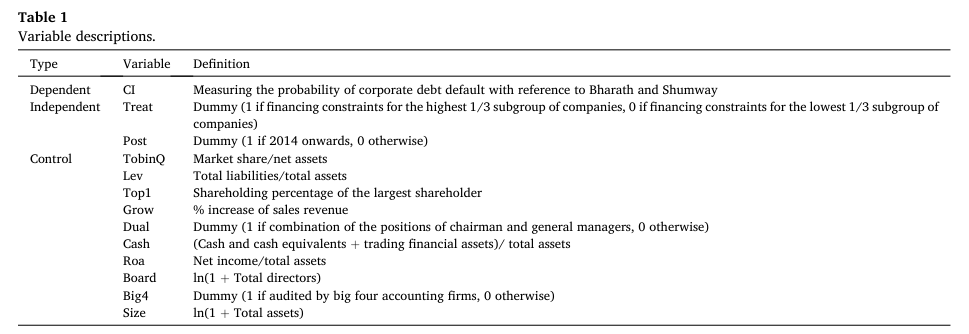
In order to better evaluate the impact of the subscribed capital system policy on the company’s creditors, based on the recommendations (Liu, Deng, Yan, & Ma, 2025; Zhao, Li, & Liu, 2025), this study includes the following control variables: Variables such as firm performance (TobinQ), leverage (Lev), equity concentration (Top1), growth (Grow), property rights (Dual), cash holding (Cash), return on assets (Roa), board size (Board), audited by big four accounting firms (Big4) and firm size (Size). These variables help to control the influence of the company’s financial and governance characteristics.
3.3. Data source and sample selection
The initial sample for this study includes companies listed on the Shanghai and Shenzhen A-share markets from 2010 to 2023. The primary data sources for these companies are the Chinese stock market and China Stock Market & Accounting Research Database (CSMAR). The registered capital subscription registration system was officially implemented nationwide starting in March 2014. This study selected the period from 2013 to 2023, which provides sufficient pre- and post-policy observation values to ensure the validity of parameter estimation while avoiding excessive policy confusion effects from an overly long timeframe.
Although most listed companies were originally established under the paid-in capital system before the 2013 reform, the policy remains economically and institutionally relevant to them. First, after 2014, subsequent capital increases, equity restructurings, and subsidiary establishments conducted by these listed firms were governed by the subscribed capital framework, directly influencing their registered capital structure and debt-equity composition. Second, listed firms often act as controlling shareholders or guarantors of subsidiaries and affiliates whose establishment and financing activities are subject to the new regime. Thus, changes in the capital
system indirectly affect the parent firms’ consolidated leverage, capital allocation, and creditor risk exposure. Third, the reform fundamentally reshaped the external contracting environment by altering the disclosure rules and legal expectations surrounding capital adequacy, leading creditors, investors, and regulators to reassess firms’ repayment credibility and adjust financing terms accordingly.
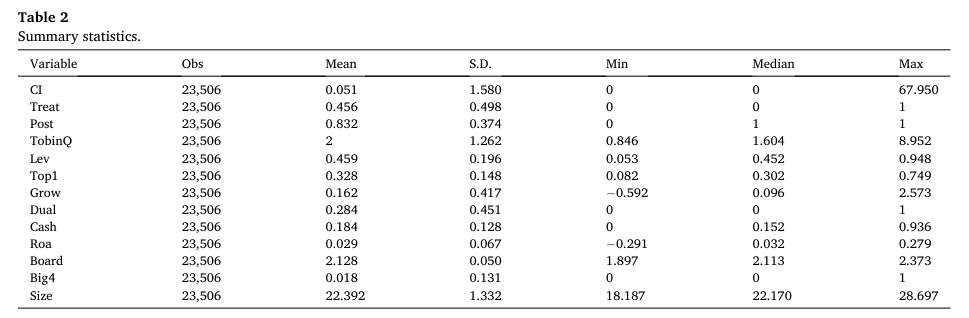
To ensure the reliability and relevance of the data, several exclusion criteria were applied: (1) financial companies were excluded due to their distinct financial structures compared to other industries; (2) samples with severe data missingness were excluded, and for individual years with missing data, linear interpolation was used to fill in the gaps; (3) companies with abnormal operations, including those with liabilities exceeding assets, as well as those classified as ST, *ST, or PT, were also excluded. To mitigate the impact of outliers on regression results, all continuous variables were winsorized at the 1 % level. After applying these criteria, we obtained a final sample of 23,506 firm-year observations from 3212 listed companies. Table 2 presents the descriptive statistics of the variables used in this study. (See Table 1.)
4. Empirical results
4.1. Baseline results
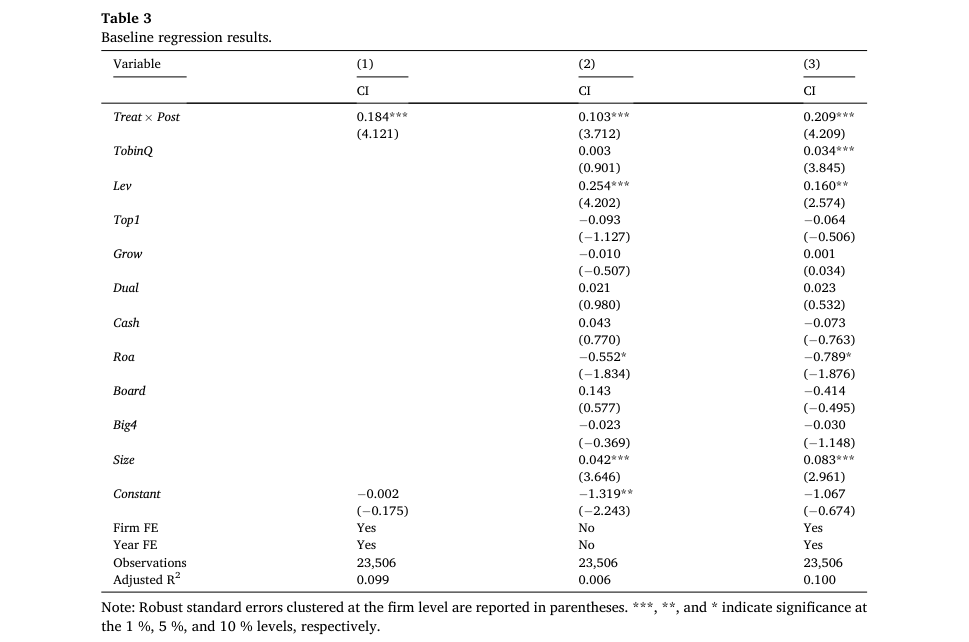
Table 3 presents the baseline regression results on the impact of the subscribed capital system policy on corporate creditors’ interests. In column (1), a parsimonious model is estimated with only firm and year fixed effects. Column (2) reports a specification that includes a comprehensive set of firm-level control variables but excludes fixed effects. Our preferred specification, shown in column (3), incorporates both firm and year fixed effects along with the full set of control variables, thereby effectively accounting for unobserved firm heterogeneity and aggregate time shocks. The coefficient on Treat × Post remains positive (0.209) and is statistically significant at the 1 % level, indicating that the subscribed capital system significantly weakens the protection of creditors’ interests. Hypothesis H1 is thus supported.
4.2. Endogeneity analysis
4.2.1. PSM-did
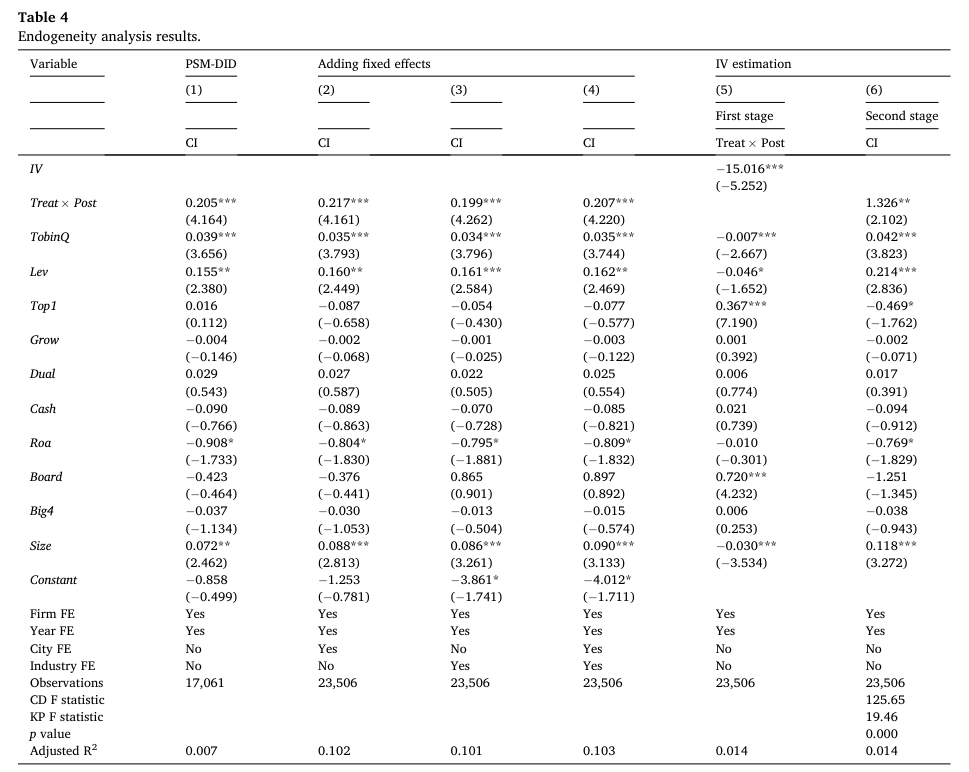
Considering potential systemic differences between the experimental and control group companies, we used PSM to enhance comparability between the groups, thereby mitigating endogeneity from sample selection bias. We adopted the method proposed by Hasan (2020) for propensity score matching. This method mitigates non-random sample selection bias in the empirical results. We used 1:1 neighboring matching. Based on the successfully matched samples, we employed the difference-in-differences (DID) method to identify the causal relationship between the capital contribution system policy and corporate debt default. As shown in Table 4, the PSM-DID results indicate that the Treat × Post coefficient is significantly positive. This means that implementing the capital contribution system increases the probability of corporate debt default.
4.2.2. Adding more fixed effects
To further address potential omitted variable bias, this study adopted a more stringent fixed-effects model. Columns (4) to (6) of Table 4 detail the regression results, which include city, industry, and city-industry fixed effects in addition to the initially considered firm and year fixed effects. For these indicators, the coefficients of the core explanatory variables are all significantly positive at least at the 5 % level, consistent with the baseline regression results, thereby confirming the stability and reliability of our preliminary conclusions.
4.2.3. Instrumental variable (IV) estimation
When analyzing the impact of the reform of the paid-in capital system on the risk to corporate creditors’ interests, we note a
potential endogeneity issue in the implementation of the policy. Local governments may selectively advance pilot programs of the paid-in capital system based on the financial health, default history, or industrial characteristics of local firms, potentially leading to biased estimates of the policy’s effects. To address this endogeneity concern, we employ an instrumental variable (IV) approach. Specifically, we use the degree of regional openness, measured by the ratio of actual utilized foreign direct investment (FDI) to regional GDP, as an instrument for the reform intensity. This measure captures cities’ exposure to international economic activities and institutional flexibility, which are closely related to their likelihood of adopting and deepening market-oriented reforms, satisfying the relevance condition. The exogeneity condition is justified as regional openness is primarily determined by historical trade patterns and central policy orientation, independent of firm-level default risk. Moreover, the exclusion restriction holds because regional openness affects creditors’ risk only by influencing local governments’ propensity to implement the paid-in capital reform, rather than by directly altering firms’ debt default probabilities. Therefore, the degree of openness provides an exogenous source of variation for identifying the causal effect of the reform on corporate creditors’ interests.
4.3. Robustness checks
4.3.1. Parallel trend test
The application of the multi-period DID method in this study relies on the assumption that the treatment and control groups exhibit
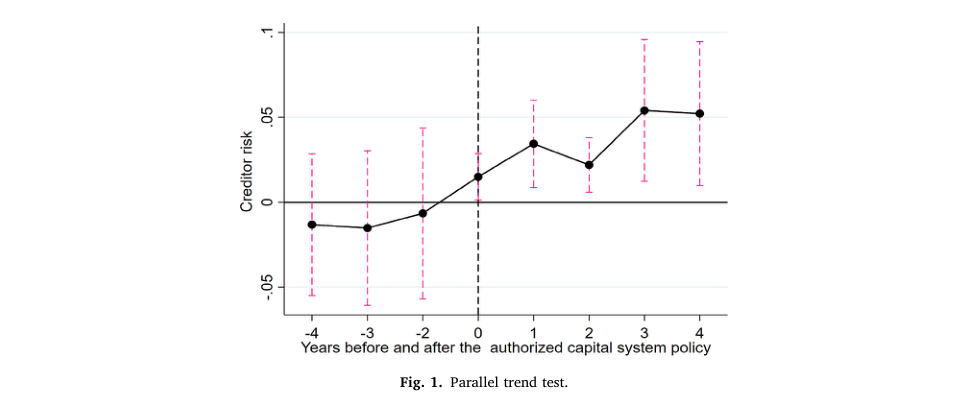
parallel trends prior to the implementation of the policy. To test this critical assumption, an event study approach is employed to examine the parallel trend, incorporating the relative year indicators before and after the subscribed capital system into the regression. Based on this, the dynamic DID model is extended as follows:

In the equation, the subscript j denotes the year relative to the implementation of the subscription system, such as j = −1 indicating the year prior to the implementation of the subscription system. This approach essentially decomposes the average treatment effect across different years, allowing for a more detailed examination of the outcomes before and after the merger. It should be noted that observations from four or more years before or after the implementation of the subscribed capital system are relatively limited, which may result in biased estimates. Therefore, following the methodology of existing literature (Li, Lu, & Wang, 2016), these observations are grouped for analysis, and the year prior to the merger is used as the reference period, thus excluding the case of j = −1. The definitions of other variables remain consistent with Eq. (1).
Fig. 1 presents the regression results of Eq. (5). The estimated coefficients of Treati × Postt+j Prior to the implementation of the subscribed capital system are not statistically significant, indicating that there were no notable differences between the treatment and control groups before the digital mergers occurred, thereby satisfying the parallel trends assumption. In contrast, the estimated coefficients for the year of implementation and subsequent years are significantly positive at the 10 % level, suggesting that the implementation of the subscribed capital system had a significant impact on creditors’ interests.
4.3.2. Placebo test
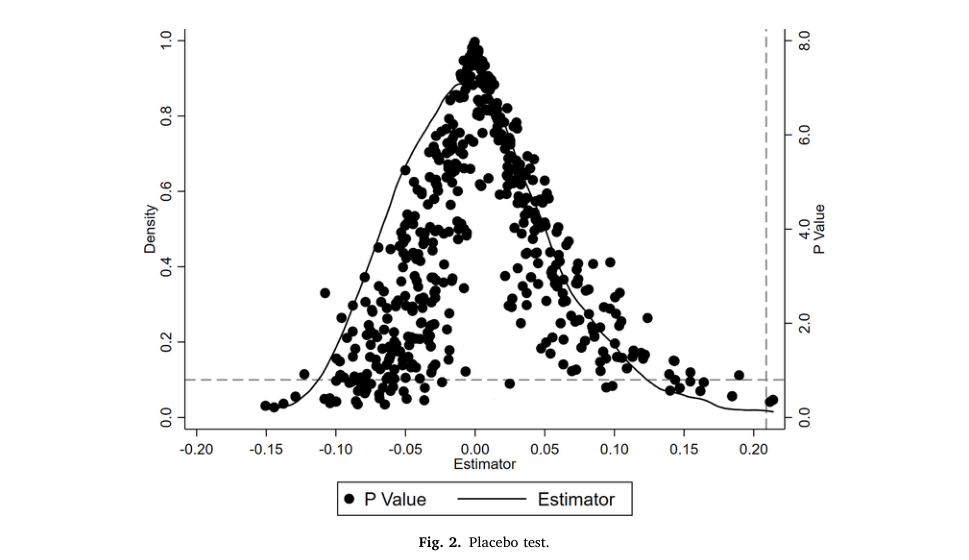
To verify that the observed effects of the subscribed capital system policy on corporate creditors’ interests are not attributable to random factors, a placebo test was conducted. In this test, policy treatments were randomly assigned across groups, and the regression analysis was re-run on the entire dataset. This process was repeated 500 times. Fig. 2 shows the distribution of the estimated coefficients and their p-values from these placebo regressions. The coefficients are mostly centered around zero and follow a normal distribution. The vertical dashed line in the figure represents the coefficient estimate from the baseline regression. Notably, this line does not intersect with the distribution curve of the placebo regression estimates. The lack of intersection suggests that the significant results from the baseline regression are unlikely to be driven by chance or confounding variables, thereby indirectly confirming the robustness and reliability of our key findings. This further indicates that unobserved regional characteristics do not significantly affect our estimates, thereby reinforcing robustness.
4.3.3. Excluding other interferences
Given the unique circumstances of the COVID-19 pandemic from 2019 to 2023, macroeconomic policies and the business operating environment have undergone significant fluctuations (Chen, Cheng, Robin, & Li 2022), which may affect research conclusions. The government’s temporary relief policies introduced to address the pandemic’s impact directly altered corporate debt repayment
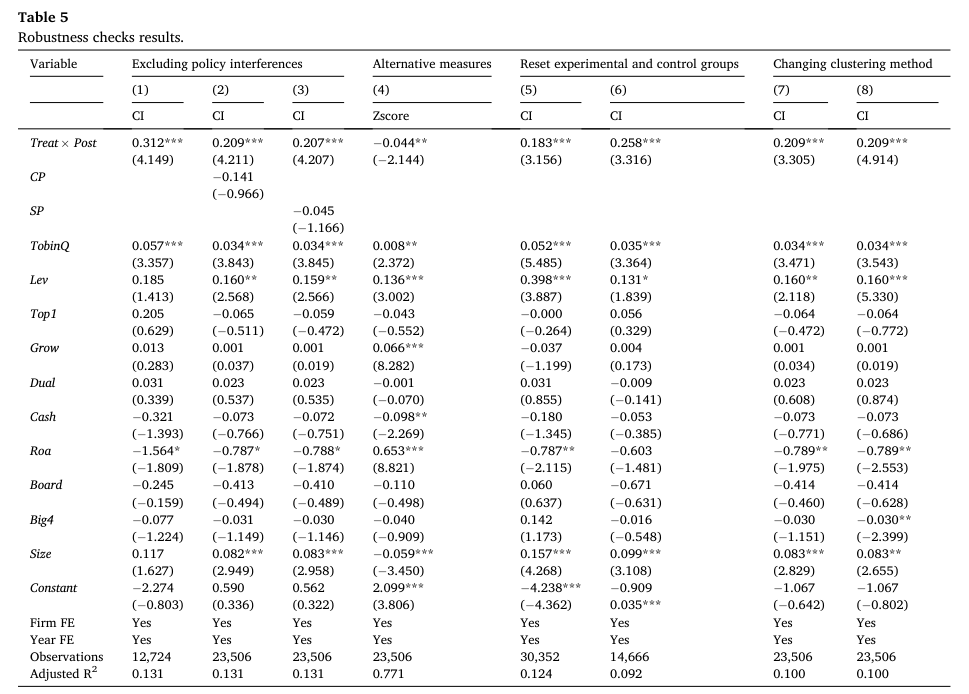
capabilities and the logic of creditors’ rights enforcement, overshadowing the normal impact of the capital subscription system on creditors’ interests. Additionally, exogenous shocks such as supply chain disruptions and pandemic-driven market demand contractions significantly amplified corporate liquidity risks, potentially abnormally increasing debt default rates or creditor litigation rates, thereby overestimating or distorting the impact of the capital subscription system. Additionally, we considered the potential interference of social credit system construction pilot programs and smart city pilot programs in identifying the effects of the registered capital system. Therefore, we constructed virtual policy variables CP and SP and incorporated them into Eq. (1) based on the regression results shown in Column (1), Column (2), and Column (3) of Table 5. As shown, after excluding the 2019 COVID-19 pandemic and the social credit system pilot policy, the core explanatory variable remains significantly positive at the 1 % level, further confirming the robustness of Hypothesis 1.
4.3.4. Alternative measures of independent variable
To mitigate the impact of measurement error, a robustness test is conducted by altering the measurement of the dependent variable. Specifically, the variable representing corporate creditors’ interests is replaced with the corporate default probability calculated using the ZSCORE model. As shown in Column (4) of Table 5, the coefficient of Treat×Post is significantly positive at the 5 % significance level, further confirming the robustness of the study’s conclusions.
4.3.5. Reset experimental and control groups
To exclude the possibility that differences influenced the conclusions of this paper in sample selection or variation between the experimental and control groups, we conducted robustness tests by varying the sample sets and grouping methods. In this paper, we used the median and the first and last quartiles of the average financing constraints of enterprises over the previous four years as the basis for dividing the experimental group and the control group. The estimation results are shown in columns (5) and (6) of Table 5, respectively. The Treat×Post regression coefficients are 0.183 and 0.258, respectively, both of which are significantly positive at the 1 % significance level, further validating the robustness of this paper’s conclusions.
4.3.6. Changing clustering methods
Considering that industry clustering can more accurately capture heterogeneous industry characteristics, such as technology intensity, policy sensitivity, and supply chain interdependence, it avoids estimation biases caused by mixing multiple industries at the
city level. For example, differences in capital structure and debt-repayment capacity between the information technology and manufacturing sectors may obscure the true impact of the subscription system on creditors. Year × city clustering can effectively control for unobservable factors at the city level that change over time, such as regional economic stimulus policies and sudden public events, and alleviate the issue of serial correlation caused by uneven external shocks affecting the same city in different years. Therefore, this paper adopts a cluster-switching approach to enhance the model’s ability to correct for intra-cluster correlation and heteroskedasticity, thereby strengthening the robustness of the regression results. The results show that the conclusions remain robust.
5. Mechanism analysis
5.1. Impact of creditors’ protection
As an important component of commercial system reform, the subscribed capital system allows shareholders to independently determine the amount of subscribed capital and the capital contribution deadline at the time of a company’s establishment, without requiring full capital payment upfront. Although this institutional design lowers entry barriers and stimulates entrepreneurial activity, it simultaneously introduces structural risks that may weaken the protection of creditors’ rights. Specifically, the flexibility granted to shareholders creates uncertainty in the timely realization of subscribed capital, thereby undermining the reliability of corporate equity as a safeguard for debt repayment. To examine the impact of this mechanism, this study employs the interest coverage ratio (ICR), defined as earnings before interest and taxes (EBIT) divided by interest expenses, as a proxy for long-term debt-servicing ability (Brockman & Unlu, 2009).
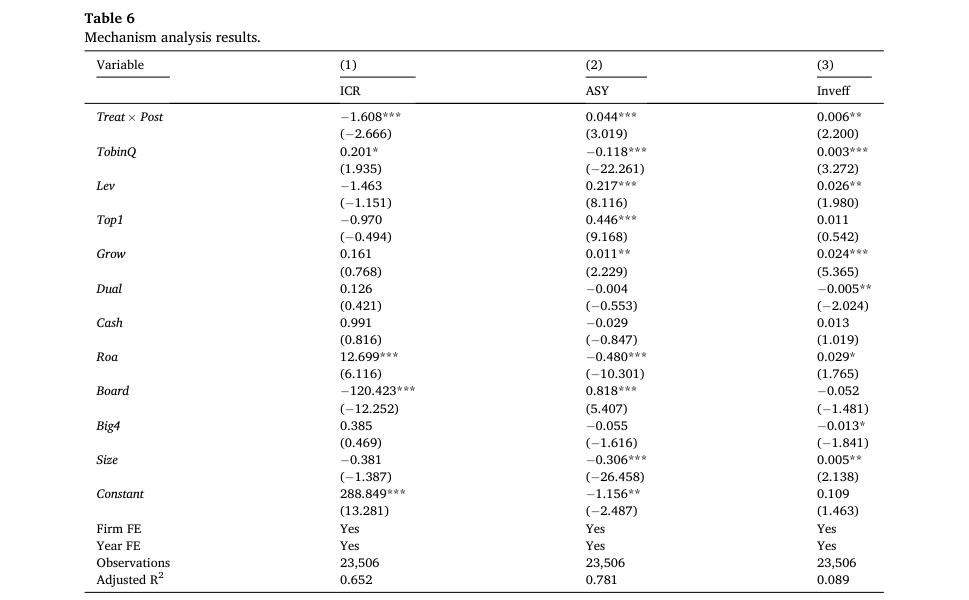
The results in Column (1) of Table 6 show that the regression coefficient of Treat×Post is −1.608 and significantly negative. This suggests that the subscribed capital system leads to a decline in the interest coverage ratio, thereby weakening firms’ debt-servicing capacity and confirming the hypothesis. Several factors may contribute to this outcome: First, the subscribed capital system introduces a time lag in capital adequacy, as shareholders may delay actual capital contributions over an extended period. For creditors, this delay means that the firm’s real equity base during the contribution period is often lower than its nominal registered capital, thereby weakening the credibility of repayment guarantees and reducing the enforceability of debt claims, which ultimately undermines creditor protection (Djankov, Mcliesh & Shleifer, 2007; Porta, Florencio, Andrei & Robert, 2000). Second, under the subscribed capital system, firms may arbitrarily overstate their subscribed capital, leading to an imbalanced capital structure. This can cause excessive reliance on debt financing while neglecting equity financing, leaving firms vulnerable to substantial debt-servicing pressure in the face of market fluctuations or poor operational performance. This distortion not only encourages excessive reliance on debt financing but also amplifies leverage-related risks, exposing creditors to greater default risk and thereby diminishing the security of creditor interests (Acharya, Amihud, & Litov, 2011; Brockman & Unlu, 2009). Third, Under the subscribed capital system, uncertainty over firms’ actual
capital commitments obscures their debt-servicing capacity, impeding accurate credit risk assessment and increasing the probability of default (Bae & Goyal, 2009). This elevated default risk not only exposes creditors to greater loss but also undermines the predictability of returns, thereby weakening creditor protection and weakening the overall effectiveness of creditor protection.
Taken together, these mechanisms form a coherent causal chain: the institutional design of the subscribed capital system generates delays in capital realization, nominally inflated equity, and heightened repayment uncertainty, which collectively erode firms’ debt- servicing capacity. In consequence, creditor protection is systematically weakened, highlighting the inherent tension between shareholder autonomy and creditor security within this regulatory framework.
5.2. Impact of weakened corporate governance
To investigate the mechanism by which the subscribed capital system affects corporate governance capabilities, we draw on existing literature (Amihud, 2002; P´astor & Stambaugh, 2003) and construct an agency variable that reflects changes in users’ information cognition using daily transaction data for individual stocks. We extract liquidity ratios, illiquidity ratios, and yield reversal indicators for principal component analysis, thereby obtaining a comprehensive indicator of information asymmetry (ASY). The higher this indicator’s value, the more severe the information asymmetry. The results in Column (2) of Table 6 show that the regression coefficient for Treat×Post is 0.044 and is significantly positive at the 1 % level. This indicates that the subscribed capital system exacerbates information asymmetry and reduces corporate governance levels. This supports Hypothesis 3, which posits that the subscribed capital system weakens creditors’ interests by reducing the transparency of information.
Several factors may drive this outcome. On the one hand, under the subscribed capital system, information regarding registered capital becomes less transparent. Business registration only discloses the total amount of subscribed capital, without requiring disclosure of the actual payment schedule or contribution details, making it difficult for creditors to access accurate and timely data on capital flows. Enterprises are allowed to set subscription periods spanning several decades, leading to a lack of clarity and predictability regarding the progress of capital contributions. As a result, creditors are unable to assess the enterprise’s future actual capital contributions, increasing uncertainty about the adequacy of funds. In the event of adverse market shocks or opportunistic behavior by shareholders, the risk that capital commitments remain unfulfilled further undermines creditors’ ability to safeguard their claims. This phenomenon reflects the problem of information asymmetry in corporate finance, in which shareholders and managers hold superior information about the firm’s actual capital adequacy, while creditors face an informational disadvantage. Such asymmetry diminishes the credibility of capital commitments, undermines the enforceability of debt contracts, and ultimately heightens creditors’ exposure to risk (Myers & Majluf, 1984).
On the other hand, the subscribed capital system lowers the barriers to business establishment, attracting a large number of small, micro, and start-up enterprises into the market. These enterprises face higher market risks and greater difficulties in capital turnover, yet their operational risks are often downplayed or obscured under the subscribed capital system. Enterprises may engage in reckless expansion during periods of capital shortage, while creditors often struggle to assess their actual operating conditions and potential risks based on publicly available information. Actual operational risks may be concealed through complex ownership structures and related-party transactions, making it difficult for creditors to accurately assess the enterprises’ creditworthiness. Such opacity increases the challenge for creditors in forecasting changes in future business performance and debt repayment capacity(Bessler, Drobetz, & Grüninger, 2011; Platikanova & Soonawalla, 2020). This heightened information asymmetry translates into higher monitoring costs, increased risk premiums, and greater difficulty in timely debt recovery, all of which weaken the adequate protection of creditors’ rights(Porta, Lopez-De-Silanes, Shleifer, & Vishny, 1997).
5.3. Impact of decreased investment efficiency
The implementation of the subscribed capital system may negatively impact corporate investment efficiency, thereby weakening the protection of creditors’ interests. Specifically, we adopt the method proposed by (2006), using the residual between actual and expected investment levels to measure corporate investment efficiency (Inveff), where a larger absolute residual indicates lower efficiency. The results in Column (3) of Table 6 indicate that the Treat×Post regression coefficient is 0.006, suggesting that the subscribed capital system significantly reduces corporate investment efficiency.
Several factors may contribute to this outcome: First, the subscribed capital system enables firms to expand their financing scale at will, allowing them to subscribe to capital far beyond their actual operational needs. This over-financing can result in firms obtaining funds that exceed their managerial and operational capacities, leading to inefficient capital utilization, idle funds, and waste. Second, the virtualization of registered capital information under the subscribed capital system makes it difficult for creditors to accurately assess a firm’s financial strength and debt repayment ability. Consequently, creditors may raise interest rates or demand excessive collateral, thereby increasing financing costs. This forces firms to become more conservative in their investment decisions, potentially foregoing promising projects and thereby reducing investment efficiency. Third, the flexibility provided by the subscribed capital system may encourage firms to shift business strategies at will or engage in high-risk investments. In practice, the long-term absence of actual capital, combined with performance pressures, may drive firms to allocate resources to speculative areas such as short-term securities or real estate, rather than to core production activities. This capital idleness and resource misallocation directly undermine corporate investment efficiency.
The decline in investment efficiency is not only detrimental to firms’ growth prospects but also directly undermines creditors’ interests. Lower investment efficiency weakens firms’ ability to generate stable operating cash flows, which are essential for timely debt repayment(Duchin, Ozbas, & Sensoy, 2010). At the same time, inefficient or speculative investments increase financial volatility(p.15)and the likelihood of default, thereby elevating creditors’ risk exposure(Biddle, Hilary, & Verdi, 2009; Dong, Hirshleifer, & Teoh, 2012). In this sense, the erosion of investment efficiency serves as an important channel through which the subscribed capital system compromises the protection of creditors’ rights. These results support Hypothesis 4 of this paper, namely that the subscribed capital system weakens creditors’ interests by reducing corporate investment efficiency. Although the subscribed capital system lowers barriers to business establishment and stimulates market vitality, it also requires enterprises to place greater emphasis on capital management and investment decision-making to mitigate potential investment risks.
6. Further analysis
6.1. Heterogeneity analysis
6.1.1. Ownership property
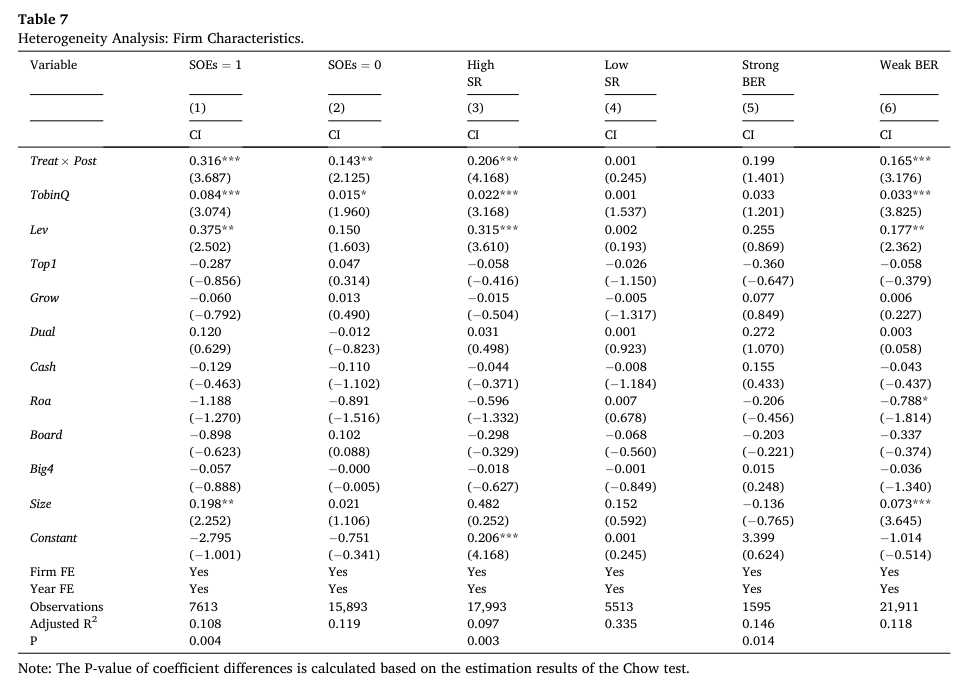
We examine the impact of the subscribed capital system under different ownership structures. Given their ownership structure, the creditworthiness of state-owned enterprises (SOEs) is often linked to government creditworthiness, enabling them to obtain higher initial credit ratings more easily. In contrast, the credit evaluation of non-state-owned enterprises (non-SOEs) primarily depends on their own operational performance, financial condition, market reputation, and other internal factors. As a result, SOEs are more likely to receive recognition from regulatory authorities and the market in direct financing channels such as initial public offerings and bond issuance, while non-SOEs face greater financing constraints. The state ownership background of SOEs provides them with certain advantages in financing and market credibility, enabling them to better withstand shocks arising from the subscribed capital system. To investigate this, firms are classified as state-controlled if they hold state shares or shares in state legal persons. In such cases, the variable (SOE) is assigned a value of 1; otherwise, it is assigned a value of 0. Firms are then grouped based on this classification. Columns (1) and (2) of Table 7 show that the implementation of the subscribed capital system policy has a more pronounced effect on increasing the probability of debt default for non-state-owned enterprises.
6.1.2. Management short-sighted
We examine the impact of the subscribed capital system on firms under managerial short-termism. Managerial short-termism is characterized by an excessive focus on short-term performance indicators, such as quarterly profits and stock price performance. Under
the subscribed capital system, such short-termism may prompt managers to adopt high-risk financing strategies to raise capital for short-term projects or expansion plans quickly. In pursuit of short-term performance goals, managers may increase debt financing while overlooking the long-term burden of debt repayment. Additionally, to conceal problems related to the firm’s debt-servicing capacity, managers may exploit the flexibility of subscribed capital to artificially inflate the firm’s capital strength, thereby misleading creditors and investors. Therefore, we hypothesize that the subscribed capital system has a greater impact on firms with a higher degree of managerial short-termism.
Following the methodology of Xie, Qin & Li (2024), a managerial short-termism index (SR) is constructed by classifying firms based on managerial ownership. Firms in the top 30 % of managerial ownership are categorized as the low short-termism group, while the remaining firms are classified as the high short-termism group. Based on this classification, a grouped regression analysis is conducted. Columns (3) and (4) of Table 7 present detailed results. These results indicate that when managerial short-termism is high, the implementation of the subscribed capital system is more likely to increase the risk of debt default. In contrast, firms in the low short- termism group, whose management places greater emphasis on long-term development and financial stability, are better positioned to withstand the negative impacts of the subscribed capital system.
6.1.3. Bank-firm relationship
We examine the impact of the subscribed capital system on firms under varying strengths of bank-firm relationships. For firms with weak bank-firm relationships, banks have a limited understanding of and trust in these firms. When guarantees or collateral are insufficient, banks rely more heavily on registered capital to assess a firm’s debt repayment capacity. However, the subscribed capital system makes registered capital an unreliable reference point, increasing uncertainty in banks’ credit risk assessments. This, in turn, affects the firm’s financing costs and access to credit. Additionally, firms with weak bank-firm relationships often lack guidance and support from banks in areas such as fund management and financial planning. Under the subscribed capital system, shareholders may delay capital contributions, leading to financial strain. Without timely supervision and advice from banks, these firms are more susceptible to cash flow disruptions and default risk. Furthermore, such firms typically have limited access to external financing and rely more heavily on internal funds. Extending the capital contribution deadline under the subscribed capital system may reduce available capital, increase financial pressure, and increase the likelihood of debt default.
Based on the existing literature (Morck, Nakamura, & Shivdasani, 2000; Lu, Zhu, & Zhang, 2012), we measure the strength of bank-firm relationships by whether the company holds shares in the bank and whether the bank holds shares in the company. If there is mutual shareholding between the company and the bank, the sample is classified as having a strong bank-firm relationship; otherwise,
it is classified as having a weak bank-firm relationship. Based on this classification, we construct the Bank-Enterprise Relationship (BER) indicator and conduct subgroup regressions accordingly. Columns (5) and (6) of Table 7 present the specific results, which indicate that the implementation of the subscribed capital system is more likely to increase creditor risk when bank-firm relationships are weak. In contrast, firms with strong bank-firm relationships, due to their greater financing capacity, are better positioned to withstand the negative impacts of the subscribed capital system.
6.1.4. Government intervention
We further explore whether the impact of the subscribed capital system differs across regions with varying levels of government intervention. Government intervention can distort market discipline and weaken the effectiveness of creditor monitoring, thereby amplifying firms’ default risk under the subscribed capital system. In regions where local fiscal expenditure accounts for a larger share of GDP, stronger expectations of government support create implicit guarantees that blunt creditors’ risk pricing and reduce the deterrent effect of potential default. When financial distress arises, local authorities often coordinate loan rollovers or arrange implicit bailouts through fiscal channels, delaying default exposure and weakening the market’s corrective function. These mechanisms jointly soften budget constraints and erode external financial discipline, resulting in a higher probability of debt default in regions with stronger government intervention.
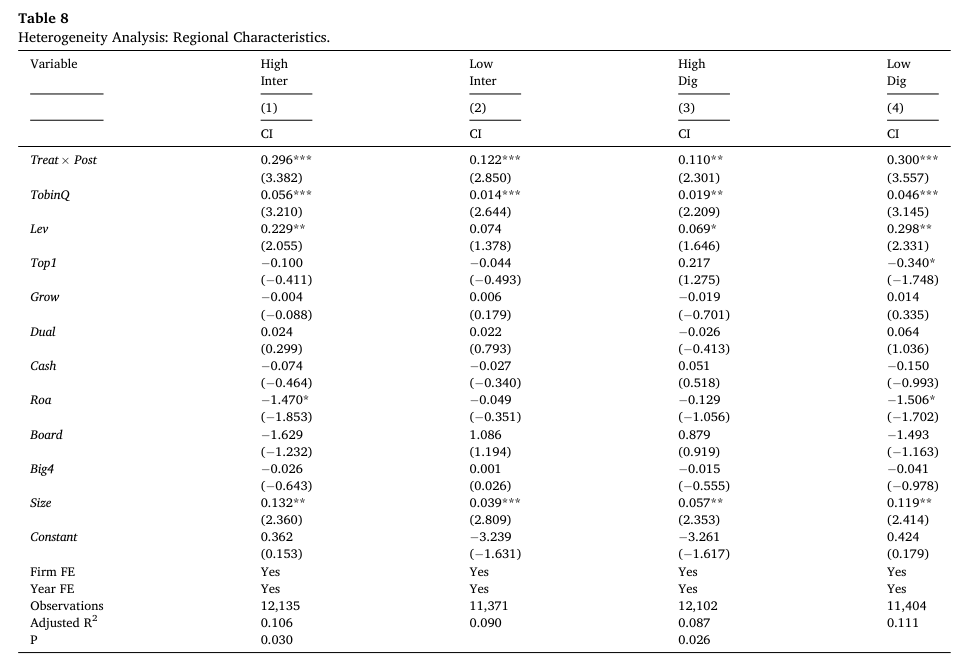
Following established studies, we measure government intervention as the ratio of local public budget expenditure to regional GDP and classify regions into high- and low-intervention groups based on the median value (Wu & Chen, 2023). Subsample regressions presented in Columns (1) and (2) of Table 8 show that the effect of the subscribed capital system on creditor interests is significantly more substantial in regions with higher government intervention. This finding indicates that administrative distortions exacerbate institutional frictions and reduce creditors’ disciplining power, thereby magnifying the erosion of creditor safeguards under the subscribed capital system.
6.1.5. Regional informatization
We further examine whether the effect of the subscribed capital system on firms’ debt default risk differs across regions with varying levels of informatization. Informatization determines the efficiency of information dissemination and the extent of information asymmetry between firms and creditors. In regions with lower informatization, weak digital infrastructure, and limited data accessibility, creditors’ ability to obtain accurate financial information is constrained, resulting in higher monitoring costs and less effective risk pricing. Under such conditions, the relaxation of capital contribution requirements increases uncertainty about firms’ actual capital strength and amplifies credit risk exposure.
In contrast, regions with higher informatization benefit from better information flow and more transparent financial reporting environments, which enhance creditors’ capacity to identify potential risks and respond promptly to deteriorating credit conditions.
Based on the total volume of telecommunication services as a proxy for informatization(Sun, Fang, Li, & Wang, 2024), the subgroup regression results in Columns 3 and 4 of Table 8 confirm that the impact of the subscribed capital system on creditor protection is significantly stronger in low-informatization regions. These findings suggest that inadequate information infrastructure magnifies the erosion of creditor safeguards, whereas higher informatization mitigates the institutional frictions introduced by the subscribed capital system.
6.2. Rethinking analysis
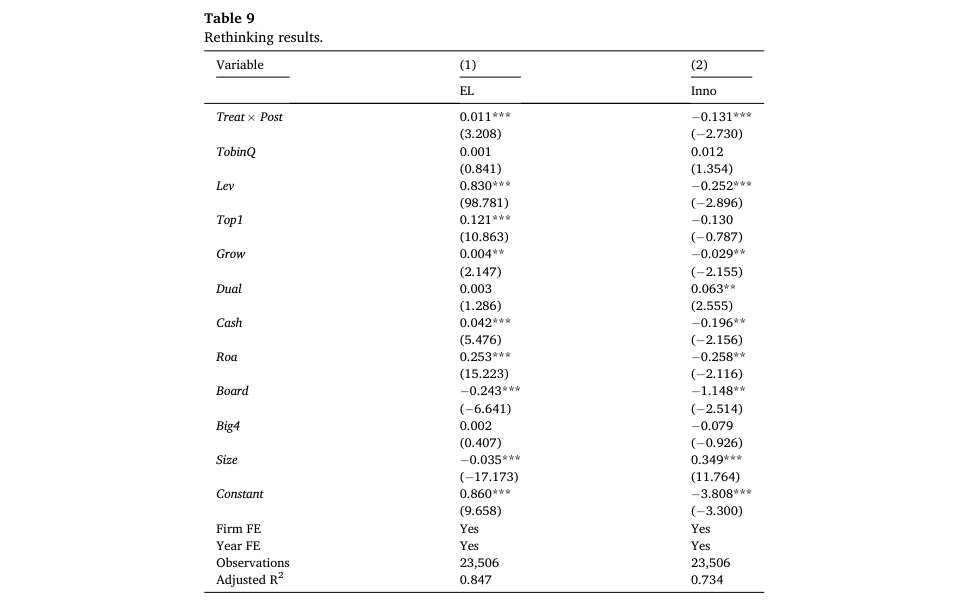
To further deepen the understanding of the impact of the subscribed capital system on enterprises, this study examines its effects on corporate over-indebtedness and innovation capability. The subscribed capital system has been found to contribute to increased corporate over-leverage. Because shareholders are not required to pay the subscribed capital within a specified period fully, enterprises may be more inclined to rely on debt financing when raising funds. This tendency can lead to a continuous expansion of corporate debt levels, significantly increasing financial risk. Moreover, the subscribed capital system has a relatively complex impact on corporate innovation capability. On the one hand, the relaxation of financing constraints provides enterprises with greater access to funds for R&D investment, thereby enhancing their innovation capacity. On the other hand, excessive debt may impose significant pressure to meet debt obligations, prompting firms to allocate more resources toward debt repayment. This, in turn, may reduce investment in innovation and ultimately weaken innovation capability. The empirical results are presented in Table 9.
7. Conclusion and discussion
This paper examines the impact of the subscribed capital system on corporate creditors’ interests. Using data from Chinese listed companies from 2010 to 2023, the 2014 implementation of the Chinese government’s subscribed capital system policy is treated as an exogenous shock. A difference-in-differences model is constructed based on financing constraints to conduct empirical analysis. The results show that the subscribed capital system policy weakens creditor interests, and these findings remain robust across various tests. Notably, weakening in creditors’ interest protection, corporate governance effectiveness, and investment efficiency are identified as key channels through which the policy undermines creditor interests.
Furthermore, the impact of the subscribed capital system is found to be more significant in non-state-owned firms, short-term- oriented management firms, firms with weak banking relationships, and enterprises located in regions with higher government intervention and lower levels of informatization. Importantly, evidence is also provided that the policy has contributed to increased corporate over-leverage and suppressed firm innovation output. Based on these findings, the paper offers the following policy recommendations:
(1) Reinforce creditor protection through institutionalized capital disclosure and enforcement. The 2024 reform introduces mandatory time limits for capital contributions and reinforces shareholder liability for delayed payment. This legal framework underscores that shareholders’ capital contribution duties are statutory obligations that cannot be waived or offset by private agreements. It also affirms that any unpaid capital remains a company asset. Building on this legal foundation, regulators should implement a tiered capital disclosure system within the National Enterprise Credit Information Publicity System. Firms should periodically report their progress on paid-in capital, including the status of any committed share premium, fund allocation, and changes in asset pledges. This information should be digitally verified through links to tax, banking, and judicial data, allowing creditors to assess the firm’s real equity base in real time. To improve enforceability, the State Administration for Market Regulation and financial regulators could jointly develop a capital compliance index, which would serve as a reference for credit institutions, enabling them to incorporate contribution performance into loan pricing and risk assessment. (2) Incorporate creditor protection into governance evaluation and market incentives. To counteract weakened governance discipline, the China Securities Regulatory Commission and the Ministry of Finance should jointly develop a Creditors’ Rights Governance Code. Boards of directors and supervisors should be required to disclose monitoring procedures for capital adequacy and debt risk in their annual governance reports, including measures to ensure that shareholders fulfill their statutory capital contribution obligations to maintain the company’s capital integrity. A Governance and Creditor Responsibility Rating could further evaluate firms’ compliance, transparency, and default history, including any failure to timely pay in capital, integrating these scores into financing eligibility and bond issuance procedures. Firms with higher ratings would gain preferential access to credit and lower financing costs, while those with poor performance would face stricter oversight. Such incentive-compatible governance would institutionalize creditor protection within the corporate management framework. (3) Improve capital allocation efficiency through incentive-compatible guidance. While reforms of the capital system have opti
mized capital contribution deadlines and improved financing flexibility, these changes do not automatically guarantee efficient investment behavior. The 2013 reform experience shows that overemphasis on nominal registered capital leads to distorted financing signals and low investment efficiency. Therefore, government and industry associations should strengthen guidance to shift enterprises’ focus from nominal registered capital expansion toward asset-based creditworthiness, grounded in actual paid-in capital and enforceable shareholder commitments, capital efficiency, and long-term innovation capacity. Enterprises should be encouraged to publish voluntary capital efficiency reports that link capital utilization with innovative outcomes and productivity improvements, thereby enhancing market confidence and providing creditors with forward-looking indicators. By embedding the optimized capital system into practices that prioritize efficiency and innovation over mere expansion, risks of over-leverage can be reduced and investment efficiency improved.
This study contributes to understanding the mechanisms of transmission and the specific effects of the subscribed capital system policy on corporate creditors’ interests. Although it has certain advantages, this paper also has limitations that offer avenues for future research. First, in terms of variable setup, this paper uses a two-part method, i.e., dividing the experimental and control groups by level of financing constraints, which may introduce selection bias. Enterprises with high financing constraints inherently have high-risk characteristics, and even after PSM matching, it is difficult to eliminate the interference of unobserved variables. Additionally, while bank creditors and non-bank creditors may have different risk management strategies, the study did not distinguish between creditor types, potentially obscuring heterogeneous effects. Finally, although this study emphasizes the impact of the capital subscription system on corporate creditors, the extent to which these findings apply to other economies remains uncertain. China’s unique environment of decisive government intervention in the market, combined with its status as an emerging economy, may make the study’s conclusions difficult to apply directly to other legal systems or mature market economies. Differences among countries in labor markets, industrial structures, and government intervention may also lead to variations in policy effectiveness. Future research could expand the scope of this study by incorporating cross-country comparisons to examine how different economic and institutional contexts shape the relationship between the capital subscription system and corporate creditors’ interests.
Funding
MOE (Ministry of Education in China) Humanities and Social Sciences Foundation (23YJC790184).
Declaration of competing interest
The authors declare that they have no known competing financial interests or personal relationships that could have appeared to influence the work reported in this paper.
Data availability
The authors do not have permission to share data.
References
Acharya, V. V., Amihud, Y., & Litov, L. (2011). Creditor rights and corporate risk-taking. Journal of Financial Economics, 102, 150–166. https://doi.org/10.1016/j. jfineco.2011.04.001 Ahmed, A. S., Billings, B. K., Morton, R. M., & Stanford-Harris, M. (2002). The role of accounting conservatism in mitigating bondholder-shareholder conflicts over dividend policy and in reducing debt costs. The Accounting Review, 77(4), 867–890. https://doi.org/10.2308/accr.2002.77.4.867 Almeida, H., Campello, M., & Weisbach, M. S. (2004). The cash flow sensitivity of cash. The Journal of Finance, 59(4), 1777–1804. https://doi.org/10.1111/j.1540- 6261.2004.00679.x Amihud, Y. (2002). Illiquidity and stock returns: Cross-section and time-series effects. Journal of Financial Markets, 5(1), 31–56. https://doi.org/10.1016/S1386-4181 (01)00024-6 Anderson, R. C., Mansi, S. A., & Reeb, D. M. (2004). Board characteristics, accounting report integrity, and the cost of debt. Journal of Accounting and Economics, 37, 315–342. https://doi.org/10.1016/j.jacceco.2004.01.004 Arellano, C. (2008). Default risk and income fluctuations in emerging economies. American Economic Review, 98(3), 690–712. https://doi.org/10.1257/aer.98.3.690 Armour, J. (2006). Legal capital: An outdated concept? European Business Organization Law Review, 7(1), 5–27. https://doi.org/10.1017/S156675290600005X Armstrong, C. S., Guay, W. R., & Weber, J. P. (2010). The role of information and financial reporting in corporate governance and debt contracting. Journal of Accounting and Economics, 50, 179–234. https://doi.org/10.1016/j.jacceco.2010.10.001 Bae, K., & Goyal, V. K. (2009). Creditor rights, enforcement, and Bank loans. The Journal of Finance, 64, 823–860. https://doi.org/10.1111/j.1540-6261.2009.01450.x Bessler, W., Drobetz, W., & Grüninger, M. C. (2011). Information asymmetry and financing decisions. International Review of Finance, 11, 123–154. https://doi.org/ 10.1111/j.1468-2443.2010.01122.x Bharath, S. T., & Shumway, T. (2008). Forecasting default with the Merton distance to default model. Review of Financial Studies, 21, 1339–1369. https://doi.org/ 10.1093/rfs/hhn044 Biddle, G. C., Hilary, G., & Verdi, R. S. (2009). How does financial reporting quality relate to investment efficiency? Journal of Accounting and Economics, 48, 112–131.
https://doi.org/10.1016/j.jacceco.2009.09.001 Bonaime, A., Gulen, H., & Ion, M. (2018). Does policy uncertainty affect mergers and acquisitions? Journal of Financial Economics, 129(3), 531–558. https://doi.org/ 10.1016/j.jfineco.2018.05.007 Brockman, P., & Unlu, E. (2009). Dividend policy, creditor rights, and the agency costs of debt☆. Journal of Financial Economics, 92, 276–299. https://doi.org/ 10.1016/j.jfineco.2008.03.007 Chen, J., Cheng, Z., Robin, K. G., & Li, J. (2022). Riding out the COVID-19 storm: How government policies affect SMEs in China. China Economic Review, 75, 101831.
https://doi.org/10.1016/j.chieco.2022.101831 Cheng, H., Ding, S., & Liu, Y. (2024). The effectiveness of entry deregulation: Novel evidence from removing minimum capital requirements. Journal of Development Economics, 170, 103304. https://doi.org/10.1016/j.jdeveco.2024.103304 Demir, F. (2009). Financial liberalization, private investment and portfolio choice: Financialization of real sectors in emerging markets. Journal of Development Economics, 88(2), 314–324. https://doi.org/10.1016/j.jdeveco.2008.04.002 Denis, D. J., & McKeon, S. B. (2012). Debt financing and financial flexibility evidence from proactive leverage Increases. Review of Financial Studies, 25, 1897–1929.
https://doi.org/10.1093/rfs/hhs005 Djankov, S., Mcliesh, C., & Shleifer, A. (2007). Private credit in 129 countries☆. Journal of Financial Economics, 84, 299–329. https://doi.org/10.1016/j. jfineco.2006.03.004 Dong, M., Hirshleifer, D., & Teoh, S. H. (2012). Overvalued equity and financing decisions. The Review of Financial Studies, 25, 3645–3683. https://doi.org/10.1093/ rfs/hhs112 Duchin, R., Ozbas, O., & Sensoy, B. A. (2010). Costly external finance, corporate investment, and the subprime mortgage credit crisis. https://doi.org/10.1016/j. jfineco.2009.12.008 Fiss, P. C., & Zajac, E. J. (2006). The symbolic management of strategic change: Sensegiving via framing and decoupling. Academy of Management Journal, 49(6), 1173–1193. https://doi.org/10.5465/amj.2006.23478255
García Lara, J. M., García Osma, B., & Penalva, F. (2016). Accounting conservatism and firm investment efficiency. Journal of Accounting and Economics, 61, 221–238.
https://doi.org/10.1016/j.jacceco.2015.07.003 Gertner, R., & Scharfstein, D. (1991). A theory of workouts and the effects of reorganization law. The Journal of Finance, 46, 1189–1222. https://doi.org/10.1111/ j.1540-6261.1991.tb04615.x Granato, M. (2017). The myth of the optimal capital structure and the dogma of creditor protection. European Business Organization Law Review, 18, 617–658. https:// doi.org/10.1007/s40804-017-0097-8 Hasan, I., Hoi, C.-K., Wu, Q., & Zhang, H. (2020). Is social capital associated with corporate innovation? Evidence from publicly listed firms in the U.S. Journal of Corporate Finance, 62, Article 101623. https://doi.org/10.1016/j.jcorpfin.2020.101623 Hawes, C., Lau, A. K. L., & Young, A. (2015). Lifting the corporate veil in China: Statutory vagueness, shareholder ignorance and CASE precedents in a civil law system. Journal of Corporate Law Studies, 15, 341–376. https://doi.org/10.1080/14735970.2015.1057965 Jia, F., & Zhang, W. (2025). Construction of a unified national commercial paper market and high-quality development of enterprises:Empirical evidence from listed companies. Journal of Quantitative & Technological Economics, 4, 91–112. https://doi.org/10.13653/j.cnki.jqte.20250310.001 Jiang, D. (2015). The query on the reform of the legal capital system. China Legal Science, 6, 136–158. https://doi.org/10.14111/j.cnki.zgfx.2015.06.008 La Porta, R., Lopez-De-Silanes, F., Shleifer, A., & Vishny, R. W. (1997). Legal determinants of external finance. The Journal of Finance, 52, 1131–1150. https://doi.org/ 10.1111/j.1540-6261.1997.tb02727.x Levine, R. (1998). The legal environment, banks, and long-run economic growth. Journal of Money, Credit and Banking, 30, 596. https://doi.org/10.2307/2601259 Li, J., & He, J. (2025). Refinement and functional adjustment of the shareholder call default disqualification system. Journal of National Prosecutors College, 33(1), 88–101. https://doi.org/10.3969/j.issn.1004-9428.2025.01.007 Li, P., Lu, Y., & Wang, J. (2016). Does flattening government improve economic performance? Evidence from China. Journal of Development Economics, 123, 18–37.
https://doi.org/10.1016/j.jdeveco.2016.07.002 Liao, Hsien-Hsing., Chen, Tsung-Kang., & Lu, Chia-Wu. (2009). Bank credit risk and structural credit models: Agency and information asymmetry perspectives. Journal of Banking & Finance, 33(8), 1520–1530. https://doi.org/10.1016/j.jbankfin.2009.02.016 Liu, J., Deng, G., Yan, J., & Ma, S. (2025). Does economic policy uncertainty matter to corporate default probability? Findings from theoretic analyses and China’s listed firms. The North American Journal of Economics and Finance, 75, Article 102313. https://doi.org/10.1016/j.najef.2024.102313 Lu, Z., Zhu, J., & Zhang, W. (2012). Bank discrimination, holding bank ownership, and economic consequences: Evidence from China. Journal of Banking & Finance, 36 (2), 341–354. https://doi.org/10.1016/j.jbankfin.2011.07.012 Morck, R., Nakamura, M., & Shivdasani, A. (2000). Banks, ownership structure, and firm value in Japan. The Journal of Business, 73(4), 539–567. https://doi.org/ 10.1086/209654 Morellec, E., Nikolov, B., & Schürhoff, N. (2018). Agency conflicts around the world. The Review of Financial Studies, 31, 4232–4287. https://doi.org/10.1093/rfs/ hhy018 Myers, S. C. (2001). Capital structure. Journal of Economic Perspectives, 15(2), 81–102. https://doi.org/10.1257/jep.15.2.81 Myers, S. C., & Majluf, N. C. (1984). Corporate financing and investment decisions when firms have information that investors do not have. Journal of Financial Economics, 13, 187–221. https://doi.org/10.1016/0304-405X(84)90023-0 P´astor, Ľ., & Stambaugh, R. F. (2003). Liquidity risk and expected stock returns. Journal of Political Economy, 111(3), 642–685. https://doi.org/10.1086/374184 Platikanova, P., & Soonawalla, K. (2020). Who monitors opaque borrowers? Debt specialisation, institutional ownership, and information opacity. Accounting & Finance, 60, 1867–1904. https://doi.org/10.1111/acfi.12518 Porta, R. L., Florencio, L.-S., Andrei, S., & Robert, V. (2000). Investor protection and corporate governance. Journal of Financial Economics, 58, 3–27. https://doi.org/ 10.1016/S0304-405X(00)00065-9 Qian, J., & Strahan, P. E. (2007). How Laws and Institutions shape financial contracts: The case of Bank loans. The Journal of Finance, 62, 2803–2834. https://doi.org/ 10.1111/j.1540-6261.2007.01293.x Shu, J., Zhang, C., & Zheng, N. (2020). Financialization and sluggish fixed investment in Chinese real sector firms. International Review of Economics & Finance, 69, 1106–1116. https://doi.org/10.1016/j.iref.2018.12.008 Stiglitz, J. E., & Weiss, A. (1981). Credit rationing in markets with imperfect information. The American Economic Review, 71(3), 393–410. https://doi.org/10.2307/ 1802787 Sun, G., Fang, J., Li, J., & Wang, X. (2024). Research on the impact of the integration of digital economy and real economy on enterprise green innovation. Technological Forecasting and Social Change, 200, Article 123097. https://doi.org/10.1016/j.techfore.2023.123097 Tomasic, R. (2015). Company law implementation in the PRC: The rule of law in the shadow of the STATE. Journal of Corporate Law Studies, 15, 285–309. https://doi. org/10.1080/14735970.2015.1044769 Wen, S., & Zhao, J. (2018). Contextualizing legal norms: A multi-dimensional view of the 2014 legal capital reform in China. European Business Organization Law Review, 19, 93–140. https://doi.org/10.1007/s40804-017-0098-7 Wu, D., & Chen, Y. (2023). Digital inclusive finance development and labor productivity: Based on a capital-deepening perspective. Sustainability, 15, 9243. https:// doi.org/10.3390/su15129243 Xie, H., Qin, Z., & Li, J. (2024). ESG performance and corporate carbon emission intensity: Based on panel data analysis of A-share listed companies. Frontiers in Environmental Science, 12. https://doi.org/10.3389/fenvs.2024.1483237 Yang, X., Jiang, B., Bai, Y., Fu, L., & Liu, B. (2025). Misallocation in China: Evidence from China’s business registration reform. China Economic Review, 93, 102452.
https://doi.org/10.1016/j.chieco.2025.102452 Yeung, H., & Huang, F. (2019). Shareholder protection in China from a numerical comparative law perspective. The Chinese Journal of Comparative Law, 7, 124–149.
https://doi.org/10.1093/cjcl/cxz001 Zhao, X., Li, H., & Liu, S. (2025). The power of credit: Can the implementation of a social credit system reduce the risk of corporate debt default? Economic Analysis and Policy, 86, 749–763. https://doi.org/10.1016/j.eap.2025.04.004 Zhou, B. B. (2025). The rise and fall of a contractual legal capital regime – lessons from a decade of institutional experiments in China. Asia Pacific Law Review, 0(0), 1–27. https://doi.org/10.1080/10192557.2025.2583325 Zhu, C. (2023). The future of the comprehensive subscription system for limited liability companies:comment on article 47 of the company law(Third review of revised. draft), 45(6), 133–145. https://doi.org/10.3969/j.issn.1001-2397.2023.06.09
Notes
- ☆This article is part of a Special issue entitled: ‘Economic impacts of the company law amendment in China’ published in China Economic Review.返回正文
- *Corresponding authors. E-mail addresses: 25110248@bjtu.edu.cn (W. Chai), zhangchunyu@tsu.edu.cn (C. Zhang), ymcui@bjtu.edu.cn (Y. Cui), 18813020312@163.com (X. Ma).返回正文